Caregiving & Support
Aging & Community
Nature: Our #1 Care Ally | An Eco Gerontology Perspective on Care
“I am beginning to learn that it is the sweet,
simple things of life which are the real ones after all.”
–Laura Ingalls Wilder
For as long as I can remember, I have longed to live a simple life on a small farm.
In my twenties, I was a carer for my great-grandmother, Tess. I prefer the word carer because caregiver never felt quite right. She cared for me as much as I cared for her.
I fondly remember our country drives. Having grown up on a farm, Tess often reminisced about her childhood. Although she had moved to the big city of Detroit and later settled in Toledo, Ohio, it became clear to me that her heart never fully left the countryside.
With her cherished dog Rizzo nestled on her lap, windows down, we breathed the fresh country air, driving into the sunrise and sunset, and became giddy as schoolgirls every time we stopped at a roadside farm stand for freshly picked produce, leaving our money in the handmade wooden honor box. We always returned home invigorated by the tranquility of those awe-inspired, nature-filled moments of shared care.
Nature as a Care Ally
“There are only four kinds of people in the world.
Those who have been caregivers.
Those who are currently caregivers.
Those who will be caregivers,
and those who will need a caregiver.”
Those who have been caregivers.
Those who are currently caregivers.
Those who will be caregivers,
and those who will need a caregiver.”
–Rosalynn Carter
How do you feel after reading Carter's words? From the moment we are born, we weave in and out of giving, receiving, and sharing care. In this sense, we are all carers.
Eco comes from the Greek word oikos, meaning home or household. Put simply, Eco Gerontology places our relationship with nature, with home, at the heart of how we understand, support, and design for aging in our rapidly changing world.
Ecology is the study of home, and economy literally means "management of home." As you can imagine, care is foundational for managing home, yet care is widely undervalued. In his book Ecocivilization, Jeremy Lent writes, "It's been calculated that, in the United States, if a homemaker were paid the standard hourly rate for her roles as housekeeper, driver, cleaner, and daycare operator, she would earn roughly $120,000 per year" (Lent, 2026, p. 112).
Think for a moment about the carers you know, including yourself.
What if the care you provided earned well beyond a living wage? What shifts when we place our relationship with nature at the heart of how we understand the economy?
Restoring Our Relationship with Nature
In Eco Gerontology, our relationship with nature shapes how we value care and the systems we create to support wellbeing for people and the natural environment.
"I can't imagine anything more important than
air, water, soil, energy, and biodiversity.
These are the things that keep us alive."
air, water, soil, energy, and biodiversity.
These are the things that keep us alive."
–David Suzuki
Our most undervalued carer is nature. Every day, the natural environment provides for our needs. Without healthy soil, water, pollinators, forests, oceans, and biodiversity, there is no economy at all.
Eco Gerontology invites us to discover economies that mimic nature's regenerative and reciprocal patterns of care. Humans and our economies are part of nature, not separate from nature. When our economies behave more like natural systems, care becomes foundational to the flourishing of people and the living world.
As we work to promote and co-create new economic systems of care, we can begin with the simple yet profound practice of restoring our relationship with nature.
According to the Nature Connectedness Research Group: "Nature connectedness captures the relationship between people and the rest of nature. Nature connectedness is a measurable psychological construct that moves beyond contact with nature to an individual's sense of their relationship with the natural world."
Research shows nature connectedness is associated with improved cognitive, sensory, social, and emotional wellbeing, increased physical activity, greater meaning and purpose, positive emotions, and pro-nature behaviors. Feeling connected to nature generates calmness, creativity, and joy, facilitates focus and concentration, and lessens feelings of isolation and loneliness for all ages (Weir, 2020).
The Science of Awe Walks
One of the most accessible and evidence-based ways to grow nature connectedness is by cultivating awe. In a world that often feels fast, disconnected, and overwhelmed by the complexities of daily life, the awe experience can restore our sense of wonder, purpose, and interconnectedness, inviting more opportunities to experience reciprocal-shared care: caring in, with, and for nature.
"The world is full of magic things,
patiently waiting for our senses to grow sharper."
patiently waiting for our senses to grow sharper."
–W.B. Yeats
Research from the UC San Francisco Memory and Aging Center and the Global Brain Health Institute found that older adults (age 60+) who took weekly 15-minute Awe Walks for eight weeks:
- Experienced increased focus on their surroundings vs. themselves.
- Had measurably broader smiles by the end of the study.
- Experienced wonder and appreciation for the details of the world around them.
- Heightened sense of exploration and expansion.
- Increased joy and connectedness.
- Self-reported improvements in wellbeing.
- Awakened sense of childlike curiosity.
May you be inspired to seek out the awe that surrounds us every day. If you are a carer, sharing awe, as my great-grandmother and I did on our countryside adventures, can boost those happy brain chemicals, prevent carer burnout and deepen our relationship with nature.
Step Outside and Restore Your Well-Being
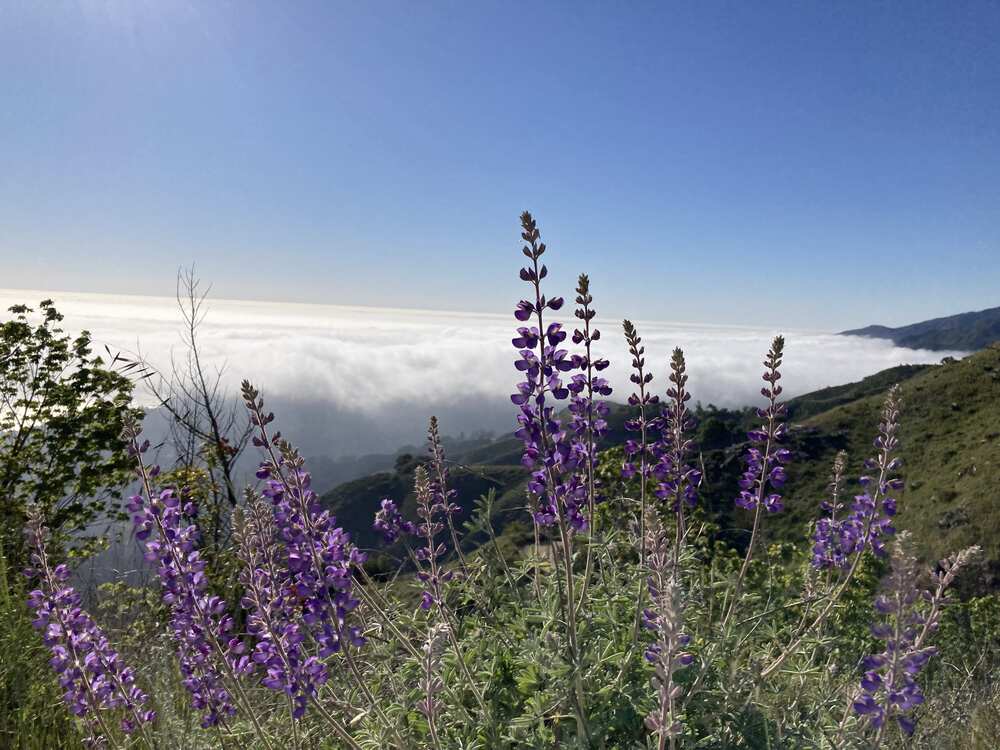
From the moment you go outdoors, wherever you may be, intentionally notice the wonders and beauty of our shared home: the intricate veins of a leaf, the resilience of a flower growing through a crack in the pavement, the movement and shapes of clouds, the sounds of birds chirping and singing, their sometimes comical flight patterns, inhale the aromatic bliss after a rain, notice the light filtering through the trees, and the calming shadows that appear. If you can, take off your shoes and feel the grass beneath your feet.
Tune into how these moments of noticing how nature makes you feel. What emotions arise?
Try it. Invite your children, parents, grandparents, neighbors, co-workers, and friends to slow down and notice nature with wonder and gratitude. You can also join me for a short Awe Walk. Even in a parking lot, there is a lot to awe about.
Monica Eastway, M.S. is the founder of The Eco Gerontology Initiative and a UIndy alumna.