Bachelor of Science (BS) in Electrical Engineering
Design and create advanced electrical systems.The BS in Electrical Engineering degree program at the University of Indianapolis (UIndy)’s R.B. Annis School of Engineering gives you the skills, experience and confidence to design, build and test the systems that power the world around you.
Through collaborative labs and hands-on client projects, you’ll develop expertise for careers in embedded systems, power systems, defense, communications, image processing and more.
Program Overview
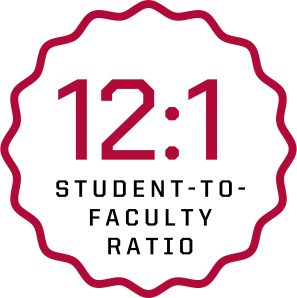
As an Electrical Engineering major, you’ll start building strong engineering, teamwork and communication skills from day one. A blend of real-life, client-focused and project-based learning and practical coursework in small classes gives you real work experiences that often turn into internships and job offers.
Highlights:
- Real industry projects through the DesignSpine curriculum, guiding client product designs from concept to market
- National competition opportunities in both the curriculum and student clubs and organizations
- Comprehensive curriculum in electronics, signals and controls, digital systems, microcontrollers and programming
- National recognition, including U.S. News & World Report's Best National Universities rankings and designation as a 2025-2026 College of Distinction in Engineering

Curriculum and Requirements
The core classes for the BS in Electrical Engineering program teach you about electrical circuits, how electrical signals create systems, how microprocessors work, and how to apply these concepts in areas like the energy industry, digital and image technology, communication and robotic systems. Along the way, you’ll complete general education coursework and foundational science classes that strengthen critical thinking and problem-solving skills.
Courses
Core courses that may be included in the Electrical Engineering major include:
- EENG 120 - DC Circuits
- EENG 220 - Digital Systems
- EENG 230 - Microcontroller Architecture and Programming
- EENG 340 - Interfacing Laboratory
- EENG 405 - Controls I
- EENG 460 - Smart Grid Power Systems
Hands-On Experiences
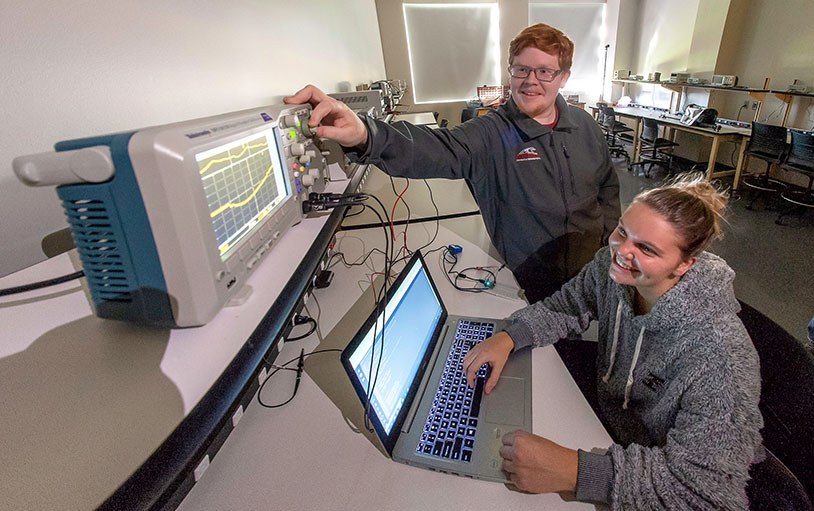
Practical engineering experience is built into every core course and project. Develop systems and devices in modern labs with technology tailored for training in circuits, digital systems, microcontrollers, electronics, interfacing and controls. Through the DesignSpine curriculum, you’ll work with corporate partners to learn how teams move from idea to implementation.
ABET Accreditation
The Electrical Engineering program is accredited by the Engineering Accreditation Commission of ABET.
Meet Your Faculty
Our faculty learn your unique skills and point of view and integrate them with their experiences in the workforce and in academic research. Meet the Electrical Engineering program faculty and explore their diverse body of knowledge — in small classes, it’s easy to ask questions, stay motivated, and grow confident in your engineering abilities.
Salary and Job Outlook
Electrical engineers are in high demand across the energy industry, telecommunications, manufacturing, and other sectors — any electrical equipment or system, from guitar amps to processing chips to power grids, requires skilled professionals to develop and improve it.
According to Indeed.com, electrical engineers in Indiana earn an average annual salary of $88,941. With an ABET-accredited bachelor’s degree covering both engineering design and practical experience, you’ll be ready for competitive roles such as:
- Electrical engineer
- Embedded systems engineer
- Engineering services consultant
- Controls engineer
A bachelor's degree in electrical engineering provides strong career prospects and sets you up for graduate programs to work in research positions in academic institutions or in industry.
Explore how Electrical Engineering and Computer Engineering are related.
Minor or Concentration in Electrical Engineering
Students in majors such as Mechanical, Computer, or General Engineering, Physics or related areas can strengthen their prospects in in-demand engineering fields by adding an Electrical Engineering minor or concentration.
Expand your skill set and career versatility with these pathways:
Activities and Opportunities
The R.B. Annis School of Engineering and UIndy offer campus activities, professional organizations and engineering-focused clubs that will make up your college community. Meet peers and advisors who will guide your journey and explore popular student clubs and organizations, including:
- Institute of Electrical and Electronics Engineers (IEEE)
- Racing Club
- Robotics Club
- Engineering Living-Learning Community
- Society of Women Engineers (SWE)
- National Society of Black Engineers (NSBE)
Admissions and Aid
Admissions at the University of Indianapolis is test-optional, and we are highly committed to affordability. UIndy remains one of the most affordable private colleges in the Midwest, with 99.6% of students receiving financial aid. Whether you’re a first-year or transfer student, you’ll have guidance at every step.


