Project 4: What Matters to You? Lead by Assistant Professor Noni Brynjolson
This project was designed for the course ART 151: Introduction to Social Practice Art at the University of Indianapolis in Semester II, 2023. As a response to the larger UIndy Saga project, it was meant to get students thinking reflectively about the issues that matter to them the most. Students were asked to create an art project about one issue that was important to them. We began by looking through the materials on the UIndy Saga website, including some of the faculty narrative podcasts. Students were then asked to brainstorm and come up with a list of issues that mattered to them, and then create a visual representation of one issue.
The works they created were presented in front of the rest of the class, and accompanied by a written description. Topics ranged from mental health issues, to women’s rights, transgender rights, animal welfare, culture, creativity, unplugging from technology, and healing from grief, among other things. Students made work in a wide range of media using an assortment of techniques, and demonstrated varying artistic abilities, since around half of the class was made up of non-art majors.
After each presentation we had time for discussion, and students had the chance to talk to each other about the issues they care most about. I (Noni) was struck by their openness and honesty, and their willingness to discuss personal, sometimes sensitive subjects, with their peers. The project offered a chance to raise awareness of important issues within the classroom, build a sense of community, and create connections between students interested in similar things.
Check out a selection of this work.
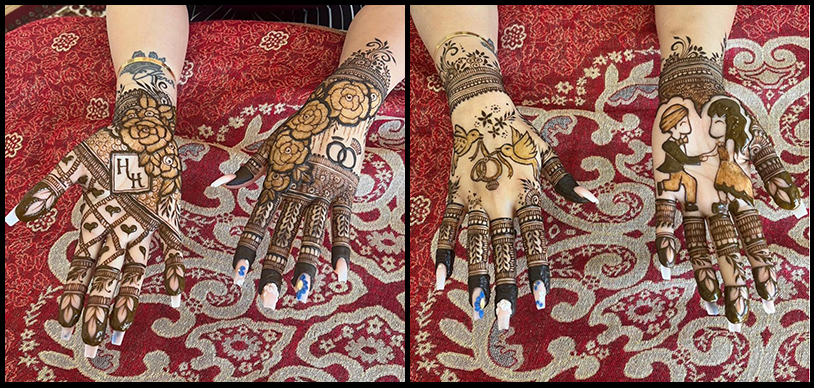
During the first couple weeks of class we took the time to discuss what social practice art is. One of the specific projects we discussed was Gramsci Monument, in which Antonio Gramsci made a platform for many latino and non latino individuals to showcase their art. He opened the doors for musicians, poets, and artists in general. When re-reading over the article “How the Art of Social Practice Is Changing the World, One Row House at a Time in which this was talked about, I couldn't help but make connections to mehndi. Mehndi also known as henna is a form of art used generally to make temporary tattoo designs on an individual's hand, arms, feet etc. This form of art work started in southern Asia dating back as far as the 1800’s is now a common practice world wide. A reason this is special to me and also the reason why I choose henna as a topic is because of its connection to culture.
Like in the Gramsci movement henna gives individuals to tell a story in a special way. In the Punjabi culture you can illustrate an event or tell a story through henna art. In fact, your family members get around you during your wedding and draw something special on your hands with henna to give you their blessing and show you love for your new future as well. Below is a picture of my engagement henna that i got done just recently in which my parents, grandparents, friends, and other family made mini designs which then turned into this piece of art for a special ceremony. Just like this there are other designs that are made up depending on the occasion. I care about this subject a lot due to the fact that it has so much to do with culture. Being a person raised in multiple culture settings it was hard growing up to find the balance in both, especially because there was a high lack of cultural inclusivity back in the early 2000’s. That has changed by so much now and I hope it continues to change over time with social art practices like the Gramsci Monument, giving everyone a platform to showcase their talent and culture.
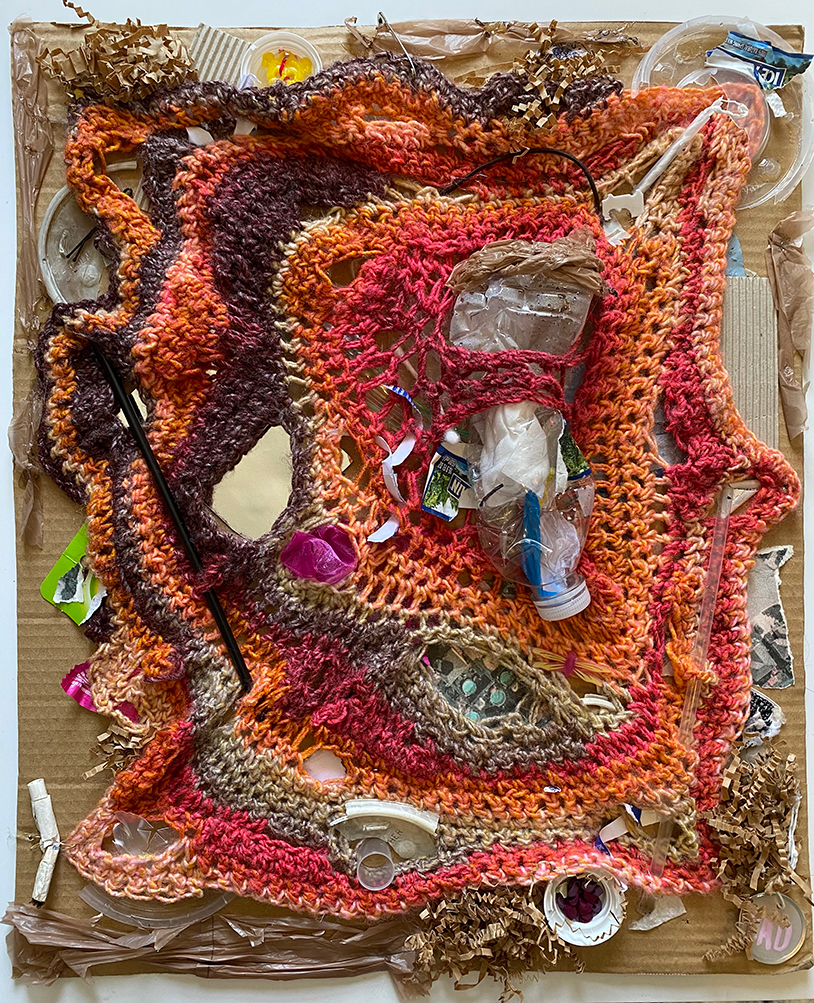
My passion for sustainability and reducing our eco and carbon footprint is what ultimately aided my idea and conceptual meaning of my project. This project is called "Woven Waste". I began by first crocheting an abstract form, I collected a bag of litter/trash around campus to incorporate into my piece. By weaving the trash and yarn together into one intertwined piece, I hope to portray the way humans are weaved in with the nature and earth around us; yet we take advantage of that environment by polluting it with our waste without thinking. My intention was to not only attempt to clean up campus, but also utilize the exact waste I found to incorporate into the form I crocheted. By choosing to combine traditional crochet with the act of literally weaving trash into the pattern, I wanted to explore the idea of challenging the way we view our environment and human waste.
Individual efforts matter. It's important as students and as a university to take into consideration the footprint we have on the environment. Collected efforts to lesson the single-use-items on campus and replace them with reusable items is crucial for the preservation of the natural environment around us. Reducing our environmental footprints as students by increasing recycling on campus can also improve our waste footprint as a university.
With a connection to Mierle Laderman Ukeles' Maintenance Art Exhibition, this similar idea of challenging the preconceived notions and observing human interaction regarding nature in art. My idea to use the litter we mindlessly dump on the ground and use it as art, I feel relates to the Maintenance Art Exhibition by giving space for the viewer to observe the waste viewed in art form. I hope to promote more questioning in how we as humans view and interact with the waste we create on Earth. By integrating found trash in this crochet project, I ultimately hope to change the viewers' perceptions of how we as individuals are truly weaved into this environment and have the power to change the way we interact with the waste we create. We can use our waste for something more beneficial to the world than polluting nature or it ending up in a landfill.
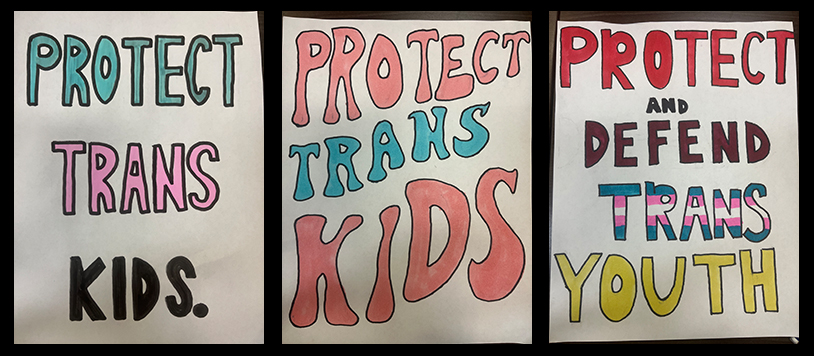
With this project, I wanted to talk about my passion for protecting trans youth. This passion sparks from anger and sadness because of the recent bill Indiana is trying to pass: the "Don't Say Gay Bill". This bill allows for kids 17 and younger to be misgendered and allows the use of their dead names in schools. This also strips schools away from educating the youth of the LGBTQ+ community, which will further stray youth from finding a community that makes them feel safe if they are figuring out they might be a part of the LGBTQ community. This bill makes trans youth feel unwelcome and unsafe in their school environment which will lead to a decline in kids who attend school and a higher suicide rate. This is not the only reason why I chose this topic.
Trans people of any age are the most susceptible people within the LGBTQ community to be harassed and either verbally or physically assaulted just for being themselves. It is important that we especially advocate for trans youth during this time because they cannot defend themselves or really have a voice. I am passionate about this topic because I can relate a lot to the trans youth and how everyone is feeling about this bill. I identify as trans-masc and my pronouns are they/he. I have really been wanting to start hormone therapy to feel more confident in myself and have more of a sense of identity. This has taken a long time for me to decide that I really want to start testosterone, but since the bill has been passed, I am not able to get into any healthcare places because they are not allowing new patients to start hormone therapy at this time due to the bill. I have heard many people think being trans is some sort of a "trend" right now, which I completely disagree with.
Just as the LGBTQ community was feeling like we have a voice, they try to tear us down with new bills that don't allow us to feel safe or loved. Even I am being affected by this bill and I am not 17 or younger. At this rate, I just know they are going to try to strip all trans people of all ages of feeling safe. They will try to tear us down for wanting to be ourselves and that is the sad truth of the world.
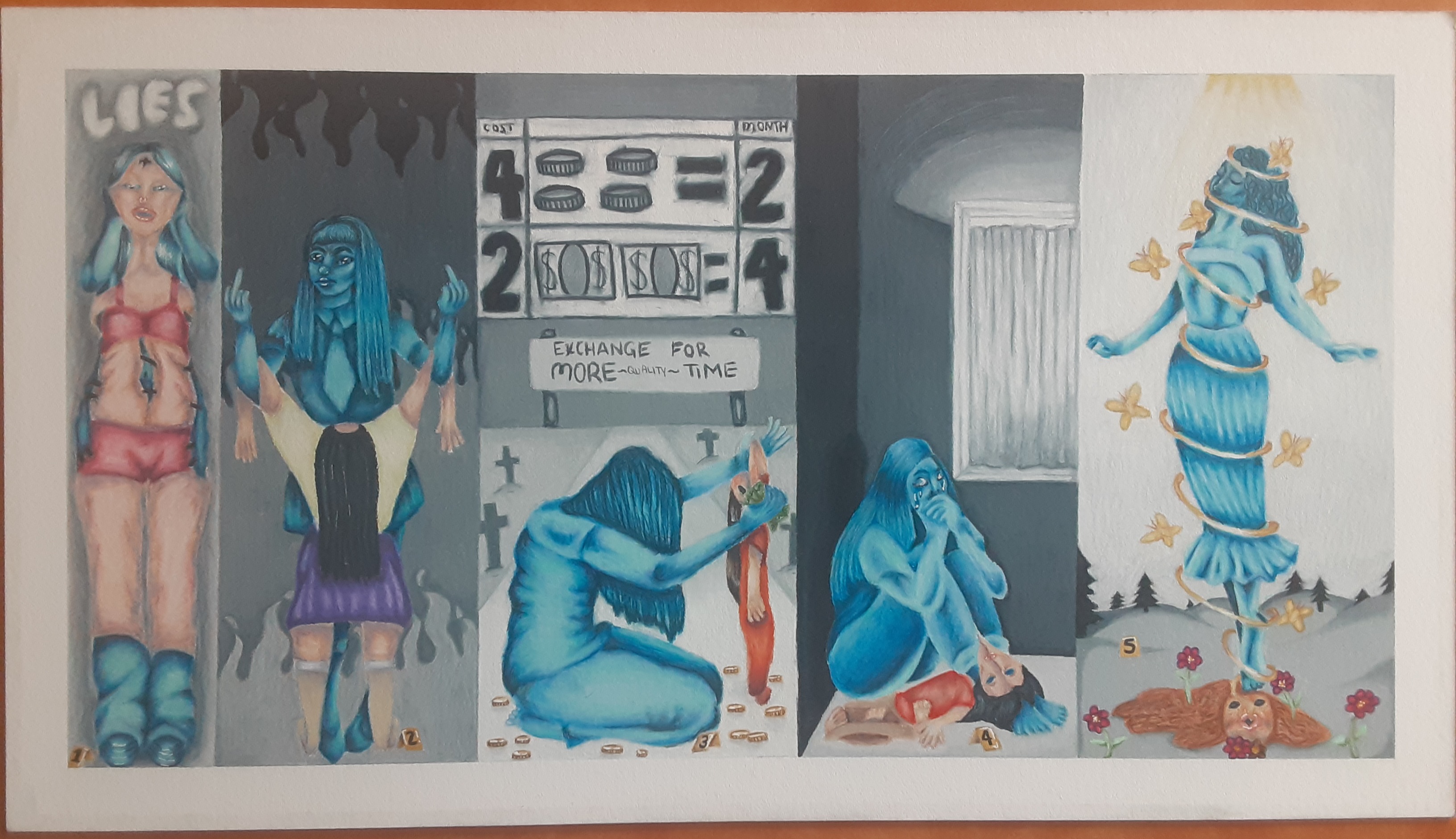
My project is a drawing using colored pencils that consists representation of the five stages of grief. These states, prior to being altered, was denial, anger, bargaining, depression, and acceptance. The focus will be the actually figures in each section of the stages, but the backgrounds will be mainly grayscale in order to have the figures more apparent to the viewer. I chose this topic because it is these vary stages that I currently shift through. Although it is common sense that these stages aren’t a one-an-done, I’ve learned through my experience that one can get stuck at a stage for any amount of time and that you can experience more than one stage at the same time. I also chose grief because the stages themselves are flawed in the majority of how sources discuss them.
They refer to them as stages, but I feel that these are more of a reoccurring process. Grief doesn’t end, but the level of those stages will be less severe. Grief is something that everyone will have to experience, but, as human beings, the thought of morality usually has us avoid any conversation of this topic. The connection to what we’ve gone through in class would be the Mexican muralist, David Alfaro Siqueiros because of his choices. A lot of his artworks would be focused on suffering and the choices he makes in his pieces influenced my decisions. His pieces, The Sob and Echo of a Scream, represent suffering through his cool tone color choices and the detail and focus in the poses and facial expressions of the figures.
A common theme in all his works, in my opinion, is that he was able to accentuate the intended emotion by choosing the right pose or facial expression. I wanted to use this aspect for my artwork and focused on the figures themselves and had the background be simple.