Dr. Phylis Lan Lin's Career
About her Career Life
It All Started in 1973. The founder of the Phylis Lan Lin School of Social Work and Counseling, Professor Emerita Phylis Lan Lin, came to her life’s work at UIndy, then Indiana Central College, in 1973. She was uniquely qualified to lead the development of social work programs that provide students with the knowledge base to work, live, and pursue economic and social justice in a diverse and global society. A native of Taiwan, she became an American citizen in 1975. Professor Lin is proudly Chinese and American, a respected scholar in the field of sociology, author and editor of more than 30 books in Chinese and in English, a connoisseur of Chinese art and the curator of the Master Au Ho-nien Museum on the UIndy campus. She continues to bring her beloved university, UIndy, to the world and the world to UIndy.
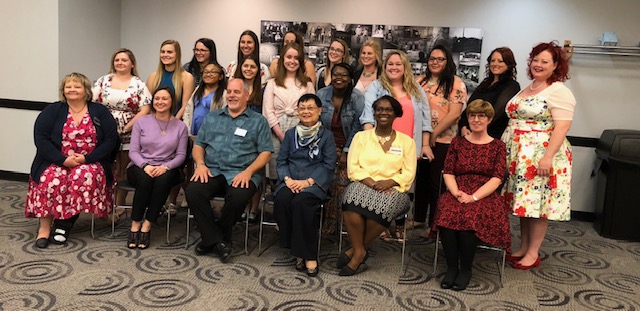
A Memorable Hiring Story. It was Dr. Leon Lin’s job that brought the young couple to Indianapolis and prompted Phylis to find a teaching position close to home. In January 1973, after a day of interviews with the Dean and faculty in the Behavioral Sciences Department at Indiana Central College, Dr. Gene Sease, President, offered her a position as Assistant Professor of Behavioral Sciences to teach courses in Sociology, writing in his offer letter, “We have been interviewing additional candidates … and have today agreed that you are our first choice for the position in Sociology.” —March 30, 1973, Dr. Gene E. Sease, President
Their successful salary negotiation launched a lifelong association with UIndy. During their interview, Phylis negotiated with Dr. Sease: “Although I am Asian and a woman, the fact that I have a doctoral degree and I am a hard worker warrant more than your offer.” He gave me $2,000 more. I said, “You will not regret it. I’m going to be the hardest worker,” and President Sease said, “done.” —September 29, 2005, Northwood Women’s Salon Connecting Cultures. “Education and Work Life” Speech by Phylis Lan Lin.
The Hiring Story, Continued. Forty-five years later, Dr. Sease congratulated Professor Lin upon her retirement:
Phylis: How very thoughtful of you to write to David and me and share several items of interest. We have read your letter and the attachments with keen interest, including the one from me.
My, how quickly the years have come and gone. It doesn't seem possible that it was that long ago—but what a blessing you have been to UIndy and all of us who worked with you. I will never forget the arrangements and trip to Taiwan, nor all you did to bring international studies to UIndy. Now when we see the international parade of flags, we marvel at how that population has grown. On a personal note, we enjoyed watching your daughter grow and become the fine physician she now is. We think of you when we see her husband giving the weather on 13. Your contribution to UIndy across the years and to the Indianapolis community has been amazing.
You were one of my best faculty choices. We will continue to appreciate your friendship to us and wish you, Leon, and family all the best. Gene and Joanne" —September 2, 2018, President Gene Sease
Dr. Lin is a “Verb.” “If people were words, Phylis Lan Lin would be a verb,” wrote Don Frick in 1978. Phylis had been named Chairperson of the Department of Behavioral Sciences just as she was about to give birth to daughter Toni, named in honor of Nordie Townsend’s daughter, Toni. (Today, Dr. Toni E. Lin, M.D., is an orthopedic surgeon in Indianapolis, she and Sean Ash are parents of three children.)
Five years into her career at ICU, she had “published three books in the last few years and a fourth is ready for release. …” “Her numerous articles include the topics of drug abuse, halfway houses, bioethics, crisis intervention, foster care and child welfare, family and marriage counseling, and the list goes on. Local community services often benefit from her personal interest and research in matters sociological.” During the 1970s-1990s, Dr. Lin wrote more than 50 articles, and gave special lectures at universities in Taiwan on topics related to applied sociology and social work. She also served on the boards of social services organizations, including the South Side Youth Council and Asian Help Services. The idea of blending applied sociology and social work can be traced back to Dr. Lin’s early academic career and community service. Early on, she had foreseen the importance of developing a social work program in the Department of Behavioral Sciences to further prepare UIndy students for their future careers in social services.
A Special Asset for Personal Growth and Career Development. “Perhaps the key to Dr. Lin’s thought and energy is her Chinese heritage, a heritage which stresses a holistic approach to life and art, to people and institutions… An Eastern heritage becomes an even stronger asset for a sociologist investigating the fluid boundaries between language and reality, thought and culture. “
To be able to blend Western and Eastern cultures has been another valuable asset for Dr. Lin’s pursuit of culture competencies in her academic career as well as in her personal life. This holistic approach is evident in Dr. Lin’s work. As a sociologist, she could be called a “linking verb,” … She forges lines between disciplines, ferrets out relationships between cultures and social systems, between health and institutions. —“Dr. Phylis Lan Lin An Active Verb” by Don Frick, Alumni News 1979, pp. 20-21
A vision. “…One may wonder why Phylis Lan Lin does it. Why the prolific writing and activity? The answer, in a word, is commitment. Dr. Lin feels a strong commitment to students in Taiwan and other Chinese speaking colleagues and readers. Even more importantly, her commitment to student education at ICU inspires her to integrate published material into lecture notes and vice versa. She speaks of a strong desire to “organize and make sense of the total enterprise of sociology.” There is a commitment to test innovative programs in the Department of Behavioral Science, to link up with programs in volunteer supervision, aging, and clinical psychology.” —Don Frick ICU Alumni News 1978, p. 21
Planting the Seed for the Social Work Program. An ambitious goal had been set. “The Department is making a five year plan toward the accreditation of the Social Work Program by the National Council on Social Work Education. An advisory committee will be formed in April, including full-time and adjunct faculty, and social work educators in the community.”
Dr. Lin chaired the Department until the end of the 1985 academic year. By then, planning for accreditation of the Social Work Program was well underway and social work graduates were successful in finding jobs. In her report to Dean Stockton, she writes: “Job placement for our social work graduates was high. Over 90% of our graduates were placed and two of them had a promotion within 6 – 8 months.” —June 1, 1985, Dr. Carl Stockton
Reciprocity. “When I came to America in 1966, I received a scholarship from the Zonta Club, an American international women’s professional organization. They gave me a scholarship for my graduate study in Montana. What came to my mind at that time was, “Someday, I will create a scholarship 100 times greater for American students as my token of appreciation to the Zonta ladies and to America!” I established a scholarship in 2000 for Social Work students and I set the goal. Yes, I will be able to reach that goal in a few years. This is my American dream. I am ready to serve Americans and America.” —“Welcome Speech” by Phylis Lan Lin, at a gala event at the Willard International Hotel in DC, sponsored by Chinese American Museum of DC, November 8, 2018
“Leadership is a continuous learning process. Leadership is like a Chinese painting. You don’t know how to describe it but when you see it, you know what it is” – “On Leadership” speech by Dr. Phylis Lan Lin at the School for Adult Learning Women’s Leadership Seminar January 9, 2004).
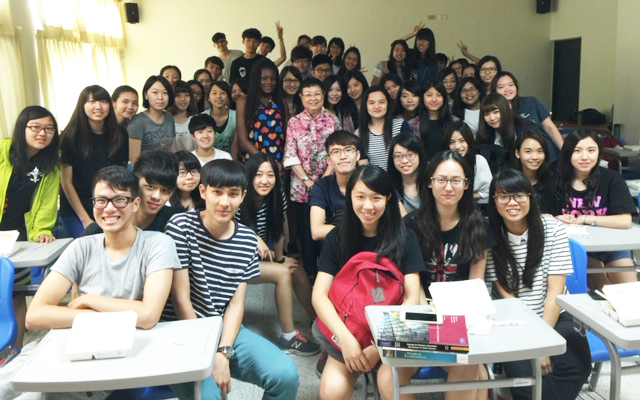
Asian Programs’ Mission. Asian Programs, founded by Professor Lin in 1991, was institutionalized by President Jerry Israel in 2000: “It is my hope that you will accept the following steps to heighten the visibility of our developing Asian programs and to provide you with the visibility and support you so richly deserve.” With a program office in Good Hall, Asian Programs provided a platform and vehicle for the University of Indianapolis to sponsor and co-sponsor, in Indianapolis and beyond, a broad range of scholarly, artistic and cultural events and exhibitions and faculty exchanges. The intent was to enhance cultural diversity by introducing Asian culture on campus and in the community. “Given UIndy’s philosophy of preparing students for life in an increasingly complex and globalized world,” Asian Programs’ mission was to offer the students at UIndy an Asian and international experience. The mission was realized by bringing conferences and outstanding performances to campus, as well as through interactions with Asian students and visiting faculty. “These types of experiences enriched the students' perception of Asian culture while encouraging the understanding of diverse cultures.” —President Jerry Israel, May 22, 2000
Asian Programs’ Objectives. Asian programs has many objectives: cultural, community and academic events, publications, international conferences, etc.:
- assist the University's diversity programs by recruiting students from Asia
- enrich campus cultural diversity via art and cultural programs
- assist a variety of programs or units to set up student/faculty exchange programs with sister universities in Asia
- collaborate with regional colleges and universities on international programs
- coordinate and support visiting scholar programs
- collaborate with the University of Indianapolis Press in publishing books with Asian titles
- implement inter-university agreements
- organize international symposia
Asian Programs was diligent in its purpose of serving as an amalgamation bridge between UIndy faculty and students, and the university’s international partners in Asia. Asian Programs sponsored programs and cultural activities and events that brought a wealth of enriching experiences to UIndy and the community. Activities were publicized in both local and national newspapers enhancing the university’s visibility.
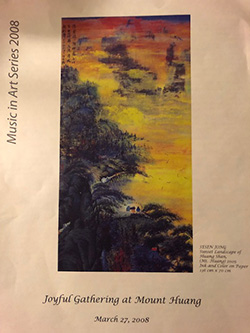
Asian Programs: the Center of UIndy’s Link to Asian Culture. “As the Director of Asian Programs, Phylis hosts and arranges for remarkable programs on campus. This fall (2007) alone she has arranged for three major events which invite and include guests from the university community, the Indianapolis community, governmental, and diplomatic offices from both the U.S. and Asia. UIndy through Asian Programs, hosted the celebration for the 20th Anniversary of the Sister State relationship between the State of Indiana and Zhejiang Province in China, featuring a photography exhibit entitled “Charming Zhejiang.” This exhibit marked the twenty year relationship fostering understanding and friendship between the two cultures.” —November 9, 2007
“…Phylis Lan Lin is bringing China to Indianapolis. ‘I have spent the last 15 years trying to bring the East and West together through various routes,” says Lin, director of Asian Programs, author and professor of sociology at the University of Indianapolis.
Today, she will be the host of scholars from the People’s Republic of China, Taiwan and the United States at the University of Indianapolis for the fifth International Symposium on China.” —September 29, 1995, Indianapolis Star
Asian Programs developed and hosted the event “Understanding Chinese Culture Through Music.” This was a collaborative lecture series highlighting the music, scenery, stories, and traditional customs of China. The presenters explored the unique elements in Chinese music and their relation to the musical interpretation. — November 12 – December 9, 2007
For decades, Asian Programs brought unique cultural and learning experiences to the UIndy campus and central Indiana community, for example, lectures on the Dragon Legend in Chinese Culture, the Chinese New Year Festival, Saudi-Chinese Coffee Hours, and Music in Art Concerts. There were special presentations for local and national audiences, for example, ‘China Old and New’ for the Governor Orr Fellows’ Program, 2012 and ‘Challenges of Caring for Elderly Parents’ at the Chicago Chinese Women’s Association, 2011.
Multifaceted Activities. In 2004, with the idea that “art cuts across national boundaries and art is one of the best venues to bring people together and enhance cultural understanding,” Dr. Lin created the annual “Music in Art” series with the purpose of bridging Eastern and Western cultures through music and Chinese paintings. Internationally renowned musicians from Asia and the United States, including the Indianapolis Opera and ink-brush painters from China and Taiwan were invited to perform on stage simultaneously. Music and art critics applauded this creative concert. This concert series has now become the “West Meets East” Concert series. The first (2015), the third (2017) and fourth (2018) of this concert series were held in Indy and the second (2016) was held in Shanghai. This concert series was organized by Dr. Lin, sponsored by the Asian Programs and co-sponsored by many local community organizations in Indiana as well as by UIndy’s international partners in China and Taiwan.
Professor Lin’s vision to fuse art forms is evident in the innovative collaboration with Indianapolis Opera in a program that combined art with opera: Chinese paintings and opera selections were executed and performed simultaneously, complementing each other on stage at the “opera and painting demonstration fusion” music/art event.
“’The Music of Art’ program at UIndy features a collaboration with the Indianapolis Opera. An innovative program will present Chinese paintings along with live selections from the upcoming production of composer Giacomo Puccini’s “Turandot,” which is set in ancient China. Dr. Lin will open the event. Also, Professor Michael Sells of Butler University will discuss “Turandot” and cast members of the Indianapolis Opera will perform, accompanied by Maestro James Caraher. A reception will follow.” —April 26, 2006 Indianapolis Star
Asian Programs Introduces Chinese Textiles. In collaboration with her sister Christi, Professor Lin brought to life the subject of their research and interest in Chinese folk objects: Symbolism of Chinese Children’s Hats and Embroidered Baby Carriers.
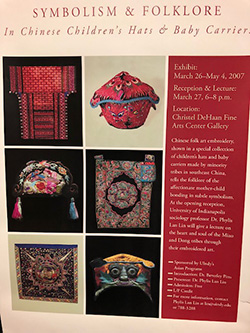
“On loan from Phylis Lan Lin, director of Chinese studies at the University of Indianapolis, the pieces on display straddle the gap between folk and fine art, serving as reminders that even the most ordinary objects can be designed with beauty in mind. While we tend to think of baby hats and carriers as utilitarian items, worrying over the pink or blue issue, the Chinese have a tradition of using those same items to symbolize a mother’s bond with her child. And with an artistry and flair that’s rarely seen in Western society. Based on symbols and stories from the Chinese folk tradition of embroidery, the 19th and 20th century children’s hats and baby carriers in this show, which are from southeast China, offer a glimpse into the depth of feelings that the Chinese mothers had for their children.” —April 1, 2007 Indianapolis Star
Asian Programs Collaborates with the Art Department. “Asian Programs and the Department of Art and Design are hosting a major exhibit of contemporary art from Taiwan, “Taiwan: From Within the Mist.” This event is also cosponsored by the National Taiwan Museum of Fine Arts, the Council for Cultural Affairs, Taiwan and the Taipei Cultural Center, TECO in New York.
These events occurring in the first semester, are the tip of the iceberg of cultural programs that Asian Programs has sponsored at the University of Indianapolis.” —President Beverley J. Pitts, President, November 13, 2007, letter of recommendation to the Asian Pacific Fund
Creative Programs. Asian Programs connected Asian artists and scholars to UIndy. Bonnie Kwan, a Hong Kong artist, was a guest artist on campus in 2001. She lectured and illustrated the blending of Chinese and Western watercolor techniques in art classes and did presentations on “The Beauty of Chinese Women through Dynasties.” She returned in 2003 for a 3-week solo exhibition at the Christel DeHaan Center as part of ‘Chromatic Concerto’ and presented lectures on “Tea in Chinese Culture.” She also collaborated with the Music Department for “An Eastern Harmony of Music and Art” hosting a talk show together with Japanese composer Takeshe Saitoh.
“Extending Art to Tea and Music were my first attempts, and if it was not for Phylis’ creative idea, I would not have enriched my experience in these directions. She makes people think, work hard, and expand horizons” (Bonnie Kwan Ho, Hong Kong, 2006). Since 2000, Dr. Lin has hosted more than 20 renowned Asian artists (painters and musicians), including Mater Au Ho-nien, Bonnie Kwan Ho, Nigel Szeo, Ng Yuet-Lau, Charles Chan-han Liu, Houxing Chang, and Weng Yi from Taiwan, Hong Kong, and mainland China and for their performances at UIndy and in Indianapolis.
Asian Programs: A Catalyst for International Events on Campus. Asian Programs provided a nexus and a hosting partner for Asian organizations in Indiana for a joint annual conference for key Asian organizations and served as co-convener for the International Conference on Asian American’s contributions to American Society, 2000. Professor Lin brought her cultural knowledge to the growing number of community programs focusing on diversity issues including the Indiana Family Relation Council’s annual conference on “Ethnic Families: Strengths and Challenges” and the International Center of Indianapolis and Indianapolis Foundation series of Creating Greater Awareness Forums. Asian Programs sponsored events were published in local bi-lingual (English and Chinese) newspapers—Indy Asian American Times and Asian American Today, and Chicago Chinese Newspaper and the World Journal (the most circulated Chinese newspaper in North America).
Asian Programs directed its efforts toward the internationalization of the university. Simply stated, Asian Programs’ aim was to bring Asia to the UIndy campus and UIndy to Asia. Dr. Lin’s goal, through the variety of programs sponsored by Asian Programs, was to enhance the university's visibility in the community and the world. Asian Programs at UIndy is indeed a significant part of Dr. Lin’s legacy at UIndy and in Indianapolis. The title “Presidential International Ambassador” which UIndy President Jerry Israel bestowed upon Dr. Lin truly reflected Dr. Lin’s endeavors in bridging East and West.
Creating Links in Asia. Early in her career at the University of Indianapolis, Professor Lin began linking the campus with partner institutions in Asia. She initiated long lasting faculty and student exchanges, joint research projects, seminars, with her alma mater, Tunghai University. As Presidential International Ambassador for the University of Indianapolis during President Jerry Israel’s administration, Phylis Lan Lin succeeded in developing relationships with several partner institutions in Asia, including two partners in China: the National Institute of Technology Zhejiang University in Ningbo and Zhejiang Yuexin University of Foreign Languages in Shaoxing, Her roles as the Director of Asian Programs and Presidential International Ambassador empowered her to represent the university abroad.
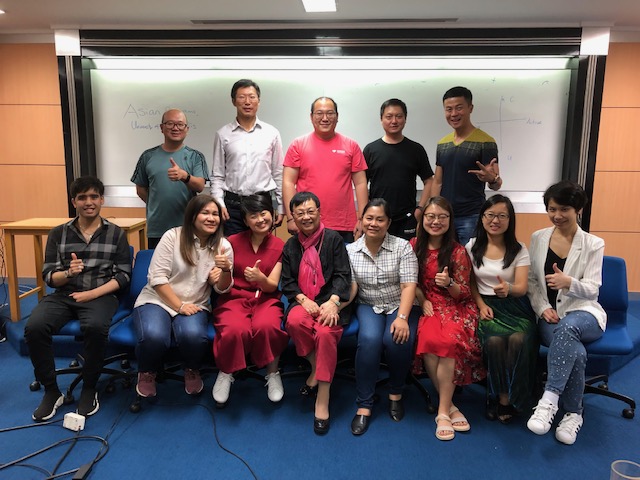
Asian Heritage as an Asset. Dr. Lin’s Asian heritage and leadership skills enhanced the university’s opportunities and capacity to forge international partnerships. Professor Lin led students, faculty, and administrators on transformative educational trips to Asia. Professor Lin also received and hosted international guests on behalf of the university’s presidents. Over time, UIndy partnerships have brought hundreds of students and visiting faculty to Indianapolis and scores of UIndy faculty have taught at partner institutions in Asia.
Increasing International Leadership. Zhejiang Yuexin University of Foreign Languages – UIndy International College (ZYUFL), is located in the city of Shaoxing, about three hours from Shanghai. Beverly Pitts, then UIndy President, appointed Dr. Lin Associate Vice President for International Partnerships and Senior Vice President of the International College. “Like other organizations around Indiana and elsewhere, we see value in building relationships with the world’s second largest economy.” Dr. Lin had also established exchange programs with universities in Taiwan, including Tunghai University, Providence University, and National Taiwan University of Education in Taichung)—UIndy 1400, 2012
Partners and Partnerships. Former UIndy Provost Deborah Balogh and Director of the Multicultural Engagement and Global Awareness Dr. Bill Dynes, jointly noted the following administrative accomplishments in their annual evaluation of Dr. Lin in 2016:
“Phylis serves in a senior leadership position in which she influences the overall direction of international partnerships at UIndy and provides day-to-day management functions in support of existing partnerships….She frequently assumes the role of ambassador to our existing partners and to our emerging partners. In many ways she is a “cultural bridge” between our primary partners, and much of her success in this role is due to her persistence, patience, and desire to ensure positive outcomes for the University…. The good work Phylis has been doing over the years in establishing lasting international relationships will continue to be a fundamental element of UIndy’s identity for years to come.” —July 28, 2016, Provost Deborah Balogh & Director Bill Dynes
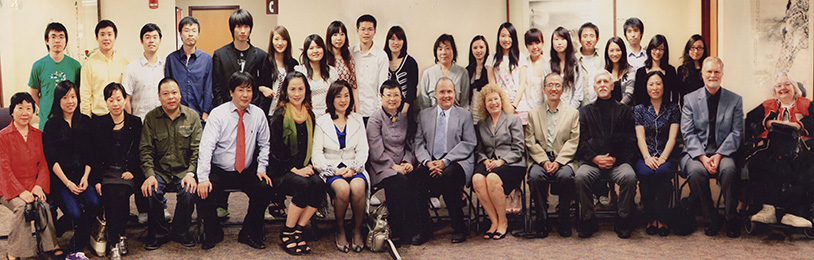
The Vital Role of International Education. Dr. Lin’s energy, vision, and sense of mission have are not restricted to the UIndy campus. Her interests include much broader issues facing higher education in America - and the world - today.
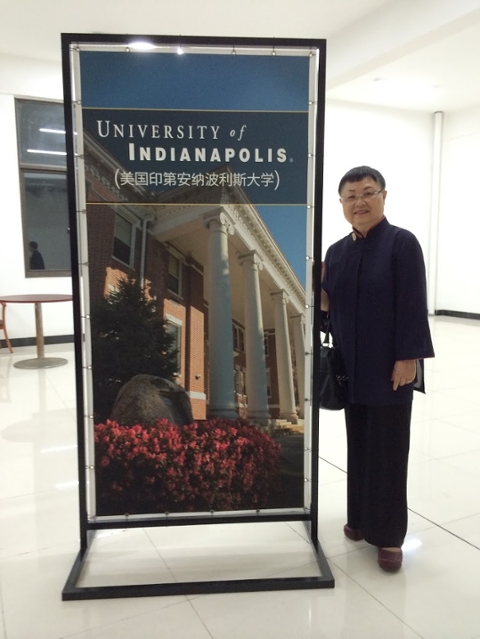
“The success of international education is a two-way process. Both the host country and the international students must make efforts to understand each other’s cultures. With their ethnic and religious backgrounds so different from America’s, students must make extra efforts to embrace the notion of cultural relativism and dispel ethnocentrism.
International education is crucial to building relationships between people and communities in the United States and around the world,” states Evan M. Ryan, Assistant Secretary of State for Educational and Cultural Affairs, in the 2014 Open Doors Report, Institute for International Education. Ryan asserts “It is through these relationships that together we can solve global challenges like climate change, the spread of pandemic disease, and combating violent extremism” (Open Doors, 2014) Dr. Lin shared the same view, pointing out, “Only by engaging multiple perspectives within our societies can we all reap the numerous benefits of international education—increased global competence, self-awareness and resiliency, and the ability to compete in the 21st century economy.” —Keynote Speech by Dr. Lin at the People to People Association 5th Annual Conference, June 5, 2015, Chicago.
The Role of International Education in Higher Education. “Our world is changing more rapidly than it ever has before…. However, we also know that the world we are building together will require tools that have not yet been forged, systems that have not yet been developed, questions that have not yet been asked. Your international education has taught you to ask those questions and has prepared you to seek answers that right now we may not even be able to imagine.
Going beyond the familiar can be frightening, but it can also be exciting, and can take us to places that we never expected or understood. The second value of an international education, I believe, is that it encourages and prepares us for those adventures. You have been introduced to people and ideas from all over the globe, and I hope that this has inspired you to see the whole world as yours.” —The 2015 Sino-American Joint Program Commencement Ceremony at The Ningbo Institute of Technology (NIT), Zhejiang, China Remarks by Phylis Lan Lin, at Ningbo, Zhejiang Province, China June 14, 2015
Promoting Diversity and Inclusion. “Higher education institutions must embrace the culture of inclusion and diversity, not limiting themselves to the inclusion of the diverse local student population but also embracing students from all nationalities and ethnic backgrounds. We must make the campus a welcoming and supportive place for faculty and students of all backgrounds. Furthermore, we must ask what colleges and universities can do to diversify their curricula. Courses that deal with global cultures and inequality should be integrated in the general education core. Courses such as Gender in the Workplace, Racism in America, Leadership across Cultures, and Civic Engagement should be considered part of the multicultural curricula. Internationalization and globalization in higher education go hand in hand. —“Beyond 2016: Challenges of America’s Higher Education” Presentation at Shenzhen University, China December 2, 2016
Issues and Challenges in Higher Education. Dr. Lin continues to speak on challenges of higher education in America. She pointed out that, “The world is ever-changing, and as higher education is continually faced with new challenges, institutions have the option to take action and be proactive in responding to changes and new trends.” Dr. Lin recommends four major tasks which higher learning institutions must confront: how to make college affordable, how to boost retention and graduation rates, the internationalization of higher education, and how to enhance and create a meaningful learning environment and promote life-long learning. Dr. Lin, a life-long educator in higher education, recommended that universities and colleges “must address and cope with increasing costs of education attainment; student retention issues, and must assist students with their career plans and how to become lifelong learners. Education and learning do not stop on the day of commencement; education is a lifelong process.” —“Beyond 2018: Challenges of America’s Higher Education” (Lin, 2019)
Related links:
The Au-Ho-Nien Museum at UIndy. An enduring legacy for all to enjoy on the campus of the University of Indianapolis is the Master Au Ho-nien Museum in the lower level of the Schwitzer Center. The Journey with Art Afar Catalogue accompanied its opening in 2004 and Jerry Israel, President of the University of Indianapolis, traces their relationship in his preface. “My predecessor in the office of university president, Dr. G. Benjamin Lantz, and Dr. Phylis Lan Lin, Director of Asian Programs and Presidential International Ambassador at the University, met Master Au in Taipei in 1990.
Master Au has been invited for several art exhibits and special lectures on our campuses in Indianapolis and Athens, and Dr. Lin has been invited to attend numerous Chinese painting seminars in Taipei, Hong Kong, San Francisco, and Beijing sponsored by the Au Ho-nien Foundation. … Now, with the establishment of the Master Au Ho-nien Museum we will create greater opportunities for art education, promote the values of art and culture, reinforce the University’s commitment to diversity, and enhance the aesthetic qualities of our campus.” —Tangible evidence of her transformative impact on the University of Indianapolis can be seen at the Master Au Ho-Nien Museum in the Schwitzer Center
“The Best Held Secret in Indianapolis.” “You won’t believe what I found in the basement of the Schwitzer Student Center at UIndy! Past the ping pong tables and sleeping sophomores, I discovered the gallery of Master Au Ho-nien, the greatest living traditional Chinese artist, and his breathtaking paintings of tigers and gazelles, exquisitely lush wildflowers and stark landscapes. Apparently, museums in Hong Kong, Taiwan and China fiercely competed to host this guy’s work, but he picked UIndy because he’s close friends with Professor Phylis Lan Lin. Best of all, Master Au comes to his museum every year to explain his paintings and demonstrate his technique.” —John Clark, June 27, 2008 Indianapolis Star
“A Student of Chinese Art” Endeavor. President Israel congratulated Dr. Lin on the opening of the Master Au Ho-nien museum on campus, with this note: “Thanks to you, Phylis – what a monumental accomplishment, you should feel a great sense of pride.” Professor Lin had written a thank you to President Israel: “I just want to thank you for making the Museum possible. We are so fortunate to have your vision and support. Service is the most rewarding thing in my life.” And she jotted down: “Ask what you can do for your university and the community, ask not what your university and community can do for you.” (After John F. Kennedy, 2004).
“It is a dream come true to establish a museum on Chinese paintings on campus and as a tribute to Master Au, a living legend who recognizes our vision at the University of Indianapolis of bridging the east and the west. This museum becomes an inviting, natural part of our campus life and of the fabric of our university.” —2004 Museum Opening Remarks by Lin
Art as a Means for Cultural Understanding. Located in the 6,000 square foot lower level of the Schwitzer Student Center, the museum contains 45 of Ho-nien’s paintings, valued at more than $1.5 million. For Ho-nien, the creation of the museum is another step toward cultural understanding. “In the 18th, 19th and 20th centuries, the East looked to the West,” he said in an interview conducted with the help of interpreter Phylis Lan Lin, the university’s director of Asian programs. “But in the 21st century, it’s time for the West to look to the East. If we can bring the two together, perhaps we can have a whole world,” said Master Au.
A Unique Cultural Asset on the Southside of Indianapolis. That was the rationale for the Au Ho-nien Museum, said Lin. Dr. Lin had a vision for the establishment of the Master Au Museum on campus. As Dr. Lin described, “This museum is unique. It is in an open, public space in our student center, a hub of activity for the university. My vision for the museum is that it will become a focal point on campus, a regular stop for campus tours, a subject for student research and discussion, a location for symposia and other academic and social events, an inspiration to our faculty and staff, a place for conversation, a sanctuary for reflection and simply a source of enjoyment for all the community.”
She developed the museum and serves as its official curator. She also hand carried (in addition to shipping) many of the artworks for the collection of the Au Ho-nien Museum at UIndy–which the artist donated through the Au Ho-nien Cultural Foundation – from Taipei, Taiwan, and San Francisco to Indianapolis.
Museum’s Mission. At the 2004 Museum Opening Ceremony, Dr. Lin remarked, “Art knows no national boundaries. My hope is that the museum will serve as a bridge between our two cultures (Chinese and American), East and West, and an enticement for viewers to learn more about China’s rich and diverse heritage.”
“I also hope that the university will host similar occasions in the future, opening its doors to other collections of art from Asia, Africa, Europe, the Americas, and any other ethnic or national tradition. I envision a day when the campus is bustling with events inspired and brought together by our collections.”
“…a day when art and world culture are woven even more tightly into the fabric of the university campus.” “Art has no national boundaries,” said Lin, seated in her office which also contains works by the artist. “Through art we should be able to bring people together.”
Friendship Through Art. The idea for the museum emerged gradually said Lin, over the past 14 years. In 1990 she made her first visit to Ho-nien’s studio in Taipei. Under Lin’s direction the University of Indianapolis also has sponsored exhibitions of Ho-nien’s work in San Francisco, Athens, Greece and special lectures on Chinese art by Master Au with the translation by Dr. Lin at the Chicago Art Museum and the Library of Congress in DC.
Their friendship has been the foundation on which the university has built its relationship with Master Au. That friendship symbolizes a key mission of the University of Indianapolis, said President Jerry Israel.
“The university has established a position as a very interested participant in international relations,” said Israel. “So to have this permanent collection of work by Master Au not only enhances the aesthetics of the campus, but also serves as a good indication of the commitment we have made to expose our students to the international community.” Added Lin: “Master Au believes in our mission, in our emphasis on service and knowledge through exposure to beauty.” —August 24, 2004 Indianapolis Star.
Art for the Community. Professor Lin received a heartfelt thank you from a Southside resident who attended the Master Au Ho-nien Museum opening:
"Dear Dr. Lin, My husband Andy and I attended the reception and dinner last night for Master Au Ho-nien. The paintings were extraordinary. The people were lovely, and the dinner was delicious. …I want to thank you for your efforts to bring Au Ho-nien’s paintings here. As one who lives on the South side I truly appreciate having such treasures nearby. I’m so happy that I’ll be able to come back repeatedly, since the exhibit is open to all, and already have many friends who also want to come. Mostly I want to bring my three-year old daughter Maya…. We are so proud that there is a strong and growing connection here in Indianapolis to Julie’s and Maya’s birth culture. Having Master Au’s beautiful work so near to our home is indeed an honor. Thank you once again for your efforts." —August 26, 2004
Professor Lin noted on the message: “My mission is to serve the community through art.”
The Master’s Work. An April 2019 exhibition of Master Au’s paintings in San Francisco at the Asian Art Museum invoked this praise:
The Bold Brush includes nine new artworks created especially for this exhibition in 2018, demonstrating how Au, a living legend now in his eighties, continues to innovate across a range of subjects: from animals and landscapes to expressive figures plucked from millennia of Chinese literature and history.
Au Ho-nien embodies the best of what the Lingnan school represents, skillfully combining the humanistic spirit and techniques of traditional Chinese fine art with Western aesthetics to create what scholars describe as an ‘eclectic fusion,’” says Dr. Jay Xu, director and CEO of the Asian Art Museum. “Visitors to The Bold Brush will be the first to see many fresh works from Au, who is easily one of the most celebrated living ink wash painters and continues to surprise and delight his audiences in new ways.”
Related links:
- Journey with Art Afar the Au Ho-nien Museum
- Master Au Ho-nien Museum and Indianapolis Opera Turandot by Puccini
2018 Chinese American Museum of DC
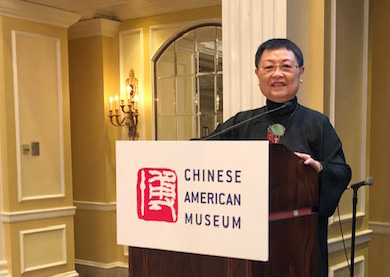
“Build it Together.” Dr. Lin serves as the Chair of the Academic Advisory Board of the new Chinese American Museum of DC.
“‘Build it together’, ladies and gentlemen, our Chinese American Museum in DC is a great and promising platform for our good cause and noble mission. We will have events and programs to tell the world our Chinese American stories; we will pay tribute to the many and transformational accomplishments of Chinese Americans; stories about their spirit, resilience, and contributions, from the turn of the last century to the present and beyond. We aim to foster appreciation of Chinese culture. We also wish to advance global learning and cultivate a deeper understanding of the history and accomplishments of Chinese Americans in both the historical context and in contemporary life. We want to showcase how America is a land of immigrants. Just like immigrants of many different heritages, Chinese Americans have been, and will continue to be working alongside all peoples in this land. We trust we can “Build it together.” We came, we integrated, and we are among the movers and shakers of this great nation.” —November 8, 2018 Chinese American Museum of DC Gala Event, Willard Intercontinental Hotel, Washington DC
An Immigrant’s Message. “I am so happy because our next generation and future generations are making good progress in this great land. This is what immigrants’ American dream is all about. Progress is the key word. We come to America, we integrate, and we become part of the American fabric. I hope my grandchildren will grow up bilingual and embrace multiculturalism. There are a few second and third generation Chinese American guests here tonight. We can’t wait to hear their stories. We are building a Chinese American Museum in DC as a platform for future generations to share with us their rich American experiences. Their stories are our American stories! They are, we are, more than ever, part of America’s mainstream. “Build it together” is our motto. We need everyone’s help to promote our good cause and noble mission. The opening of this museum is timely and exciting. It represents the best of Chinese and American values and work ethic and signals the importance of valuing and understanding diverse heritages in our globalized society.” —November 8, 2018 Chinese American Museum of DC Gala Event, Willard Intercontinental Hotel, Washington DC
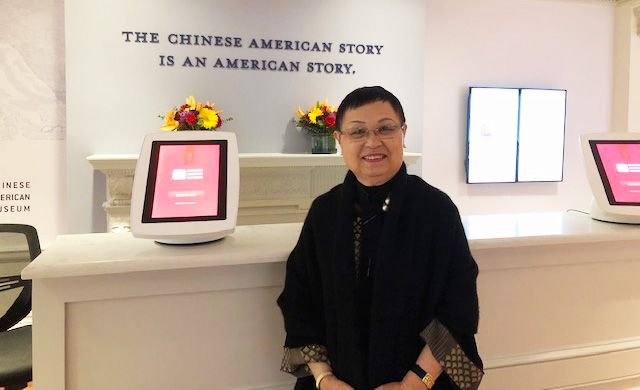
Teaching, Research, and Service. Thirty-five years ago, Noel C. Baker, Dean of the Graduate School, Indiana Central University, made this observation about Professor Lin: “The vita for Dr. Phylis Lan Lin reflects the activity associated with her scholarly life. There is no doubt she is a producing scholar who is on the cutting edge of certain topics in her discipline. Dr. Lin values research and is unique in our setting where heavy teaching loads are maintained, by adding time to her already busy schedule for research and writing.
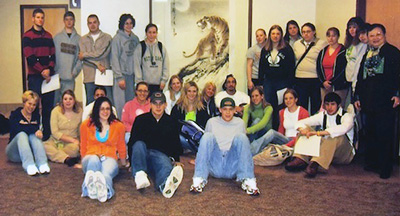
Her teaching is consistently evaluated at high positive levels. She is considered by her students and colleagues as a most competent instructor. In addition to her teaching contact with students she is available as an advisor to many and serves as an advocate for improved quality of academic and cultural programs for students. “
“A few years ago, one of our students in Applied Sociology, Kristene Ruddle, interviewed me. She asked, “What do you pass on to your students?” My fellow graduates, allow me to repeat to you this morning what I said: “Take pride in yourself. What you do is important. You may affect one person, who then affects more. Be passionate about what you do. See your service, your work, as blessed. You are shaping individuals, and individuals shape society. Be well-rounded, be a lifelong learner, and approach every person as an individual, regardless of his or her socioeconomic status or occupation.” —Commencement Speech June 19, 2009 at Ningbo Institute of Technology, Zhejiang University, China
Students’ Reflections on Dr. Lin’s Teaching Philosophy. Dean Baker’s praise is reflected in the words of her students:
C.R. “The teaching philosophy of Dr. Lin is that one must use the V.I.P. style.”
K.F. “I enjoy Dr. Lin’s teaching philosophy a lot. The style of teaching helps me to get through this class. I just really enjoy being able to connect the things we discuss in class with everyday life. I will highly recommend any and everyone to take this class with Dr. Lin.”
J.F. “I liked the way you taught. Even at times I felt uncomfortable, you forcing an answer out of us or calling on us forced us to think. I have learned a lot in this class. You drive home points very well.”
B.K. “Dr. Lin’s teaching philosophy is a way of interacting with students in ways that help them to better understand different subjects and cultures.”
R.E. “Dr. Lin’s teaching philosophy is wonderful. She may be challenging, but it’s worth it. I have learned so much in her class. She wants the students to believe in what sociology is. She makes the students want to learn. The philosophy on teaching is much more than a paycheck. It’s her passion. She wants every student to learn and grasp the ideas she is trying to get across to us.”
H.K. “Dr. Lin does a good job on teaching. She really expects a lot from us and pushes us to do well.”
J.K. “Dr. Lin teaches by interacting. She likes students to be involved in class. This way they remember more and are attentive. She also wants students to learn by teaching. Students are called on to speak in front of the class and to teach what they have learned. She also believes that there are many possible answers to questions but they must have good support.
J.B. “Her teaching philosophy is to be very interactive in class and be able to communicate to each and every student in the class. Also, the class must respond back and be taught by example, and not just by the book.
“Once I Am Your Student, I Am Your Student Forever.” There is a Chinese saying that “Teacher-student relations are life-long relations.” In the course of her dedicated teaching Dr. Lin received hundreds of notes from students and colleagues. A few examples follow:
December 2, 1988
Dear Dr. Lin:
I shall never forget you!
I was a student (an older adult) in one of your classes in 1974-75. Attending your class was the highlight of my week long morning classes schedule. I recall vividly the frustrating moments in them, but entering your area was akin to being given your individual rainbow. There was good teaching in sociology class; there was warmth and energy; there was student response; there were good exams with tough, but fair, questions that related to classroom activity; there was a very capable and prepared instructor; and you were the shining beacon, Dr. Lin.
During these years, I have remembered you and you were generous and kind to me. Also, I’ve seen, for the third time, the movie, The Good Earth. My second viewing was in one of your classes. I still find it emotional – in positive ways.
Today is my vacation day and I wanted to visit you. I do apologize for not making an appointment. I will do so henceforth.
Will you kindly accept this package from me?
I am: Elizabeth Pillow
April 28, 1993
Dr. Lin:
I just would like to share a little information with you that I consider rather important, however it might not be scholastic but still relevant – at least to me. When I came into your class I had a negative attitude – I do not know if it was obvious or not, but I did not want to be there because I found out that you were Korean-Chinese? I don’t consider myself to be a racist, however, I’ve had a few bad incidents w/Koreans & Chinese and Japanese people therefore it left me w/ a “sour” attitude towards these particular races, however I think my attitude has changed and I believe my grades have improved and I look forward to coming to your class. We often times do not get time to always talk w/teachers on an outside level, or outside of scholastic work, however I know my schedules busy, but I just wanted you to know that I credit you for the change in my attitude and outlook and through some of our class work also, esp. stuff on Racism it really touched me and I believe that is why I could write so well, because I could relate somewhat. Anyhow I believe that you are a beautiful person – and through your class I have had a new awakening and I’m not saying this to receive and “A” in your class but because I try to give credit when credit is due. Also the fact that a class and a teacher has changed someone’s outlook on life or their opinions or ideas about things you just don’t hear often, or people don’t talk about it too much. However, I felt as if this was relevant and I also felt as if this was important for you to know and no strings attached per se – But I just wanted to tell you Thanks and I enjoy your class and you as a teacher and a person too. –Tashia Tanner
“I met Dr. Lin while I was studying for my Master's Degree in Sociology at the University of Indianapolis and was in a Chinese Culture and Society course that she taught. I was so taken by her passion and impactful delivery of the course. Most importantly, I was amazed at the care and love she showed for her students. I remember today, 15 years later, each and every moment that I saw her talking to a student and each and every moment she did so in an encouraging, caring, mentoring way. I took so many notes back then of things that I was learning from Dr. Lin about people, about togetherness, about true leadership and about inclusion. I am not sure that I had the opportunity to ever tell her how important a role she played in my personal growth. She taught me to appreciate, she taught me to lead, allowed me spaces to fail, learn and grow. She still does.” —Marianna K. Foulkrod, Director of Service-learning & Community Engagement, Shaheen College of Arts & Sciences, University of Indianapolis
Dr. Lin is far from ‘retired’, in fact, she serves as Visiting Professor for the PhD in Organizational Development Program at Assumption University, Thailand.
A current graduate student expressed her gratitude for Dr, Lin’s mentoring as PhD advisor in a testimonial in 2017: “No matter how tough the situation is, Dr. Lin will always encourage me to stay positive. As her advisee there’s never been a moment that I would feel neglected or hesitated to ask her for advice, I always perceive all the support and guidance whenever I feel lost. Her experiences, passionate and tireless energy lead her to this position where she can help others to overcome any obstacles.” Por Suramanee, doctoral candidate in Organizational Development, Assumption University, Thailand.
Por’s classmate, Umaporn Limpatanachote, said, “May I ask you to be my advisor as I was impressed by you since the first class.”
The most frequent comment we have heard from Dr. Lin’s fellow students upon their graduation, especially those Chinese students who were in the joint program, is “Dr. Lin, you have changed my life! Thank you.”
A Devoted Teacher From Across the Sea. Dr. Lin came to America in 1966. It has been more than “half a century” that she has been away from her homeland in Taiwan. Dr. Lin has made frequent trips to Taiwan to visit her family and to give special lectures at universities and colleges. Dr. Lin often says, “Taiwan is like my mother and America is like my husband. I love them both.” Because she worked full-time in the United States, Dr. Lin had very little time to continue to devote herself to students in Taiwan. So in lieu of her physical presence in Taiwan, she has written books and articles in Chinese for Chinese readers since early 1970s. In 2000, she published a comprehensive textbook, Sociology (670pp) for students in Taiwan that has been adopted by several universities. Dr. Lin also published textbooks and readers, including Medical Sociology, Marriage and the Family, Stress Management: A Holistic Approach, Organizational Behavior, Crisis Intervention: Theory and Practice, Service-Learning: Theory and Practice, etc. in Taiwan and mainland China.
“Professor Lin is a multi-faceted person who does not single out her academic training, leadership style, or her Chinese heritage as one singular factor in her success in teaching, scholarship, and administrative work. It is the combination and interaction of these traits which makes her a very unique person and a leader in higher education in America.” —President Emerita Beverley Pitts, 2007 Nomination for Torchbearer Award
2008 Jerry Israel Interfaith Service Award to recognize her promotion of campus internationalization and diversification. “Dr. Lin has been a blessing to this university at all levels. She has educated and mentored hundreds of students, positively enriching and affecting their lives. She has brought her rich culture from Taiwan to our campus through art shows, book signings by authors, renowned painters and their countless performances on campus. [...] She is the quintessential ambassador for the University of Indianapolis, showcasing our university to many and teaching us all about Asian culture and beliefs.” Toni Peabody, Letter of Nomination “Simply put, whether at home or abroad, Phylis Lan Lin is a remarkable intercultural and interfaith ambassador for this university.” —President Beverley Pitts Citation for 2008 Recipient of the Jerry Israel Interfaith Service Award
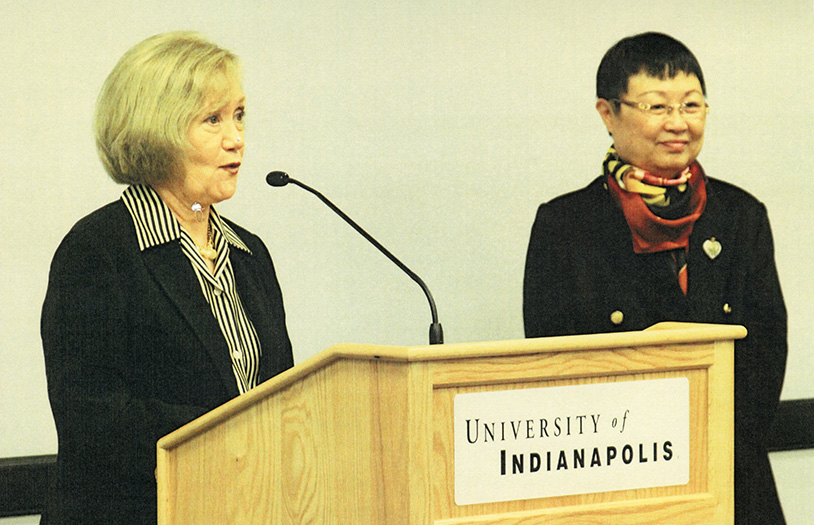
Dr. Lin retired in August 2018. Students and faculty paid homage to her almost half a century-long devoted service in higher education. She received the 2018 Distinguished Faculty/Staff Alumni Award from the University of Indianapolis Alumni Association for her dedication and outstanding service to the university and the 2018 Award for Outstanding Contribution to International Cooperation in recognition of her commitment and dedication to the Sino-American Joint Program during 2003 – 2008, presented by President Jin Weiliang, Zhejiang University, Ningbo Institute of Technology, at the Joint Program Commencement in Ningbo, China among other high recognitions.
2018 Phylis Lan Lin Receives Meritorious Award Upon Her Retirement. “Dr. Lin joined the University faculty in 1973 with a passion for enhancing diversity and internationalization on campus. Her many responsibilities have included serving as executive director of the University of Indianapolis Press, director of Asian Programs and associate vice president for International Partnerships. She played an integral role in forming accredited partnerships with Chinese institutions and establishing the Chinese Student Alumni Association, making frequent trips overseas to forge new relationships. She also spearheaded the establishment of the school’s social work program, which is now an academic department that bears her name. The Phylis Lan Lin Scholarship in Social Work, which supports social work students from traditionally underrepresented groups who have a commitment to social work and social justice, is another important facet of Dr. Lin’s legacy. Four to six scholarships of $5,000 each are awarded annually to students enrolled in the bachelor and master of social work program at the University of Indianapolis.” —Provost Stephen Kolison, August 24, 2018
“We are incredibly proud of Dr. Lin’s achievements. She is one of the hardest working members of our department and an integral part of our team. We are grateful for her fantastic 45 years of service,” said Amanda Miller, chair of sociology.
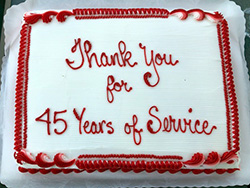
“Professor Emerita.” Retired Associate Vice President for International Partnerships, Professor of Sociology, Phylis Lan Lin received the Meritorious Award upon her retirement from the University of Indianapolis in the fall of 2018 and was granted the title of professor emerita. By that time, she had “served the institution for 45 years, taught a lot of students, contributed significantly, represented us abroad in so many countries and helped us build programs overseas that brought students from these countries to UIndy,” said Stephen Kolison, Provost. “She is very generous, established scholarship funds that support students on this campus and helped to establish the social work program and was very generous to that program.”
Provost Kolison observed that “She has a legacy at this university that is going to go on for years to come.” Among signature legacies that she made happen at Uindy are the international education partnerships with institutions such as the Ningbo Institute of Technology and Zhejiang Yuexiu Foreign Language University and ZYUFL-UIndy International College, located in Indiana’s Sister State, Zhejiang Province, People’s Republic of China. In fact, at the retirement ceremony, Lin said “We want to have international programs for UIndy so anywhere, always, some UIndy related activity is going on, so the sun never sets. That is my dream.”
Internationalization via International Symposia. Beginning in the 1980’s Professor Lin organized and chaired eleven international symposia on three subjects: Marriage and the Family: East and West, China, and Service-Learning: Interdisciplinary, Intercommunity, and International.
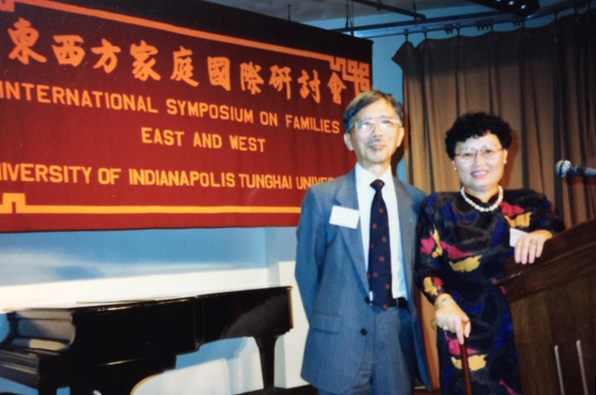
West Meets East. Dr. Lin not only convened the symposia, but also took the lead in publishing the proceedings through the aegis of the newly founded University of Indianapolis Press. This ‘Afterword’ for the Families East and West Symposium captures its impact.
AFTERWORD
“In his opening lines of Anna Karenina, Tolstoy observes that: “all happy families resemble each other, each unhappy family is unhappy in its own way.” In this remarkably eclectic collection of papers, we have glimpsed some extraordinary facets of the human family which, however geographically disparate, display startlingly recognizable similarities. We are led to conclude that the family is at the root of the wider community; and that its strengths and weaknesses will ultimately be discerned in that community.
It has been instructive to probe manifestations of family life among widely scattered peoples, each with distinctive backgrounds. These papers have added to our knowledge of this critical area in our common humanity, and indicate the need for continuing scholarly inquiry, both to quicken our understanding and to awaken the possibilities of solutions to common problems.
The proceedings of this seminal symposium are a positive result of international cooperative effort, and will provide momentum for future symposia of comparative scholarship. “—January 2, 1992 by Phylis Lan Lin
Connecting the University of Indianapolis to the world is a central focus of Professor Lin’s work throughout her career. Going far beyond connecting, as Director of Asian Programs for the university, her intercultural and multilingual skills enabled her to convene seminal programs, international conferences on China and international conferences on Families East and West that attracted local, national and international recognition. In the preface to China in Transition, Selected Essays, Professor Lin writes: “Under the sponsorship of Asian Programs at the University of Indianapolis, and of Franklin College, scholars from around the world have convened since 1987 in Central Indiana sharing their observations, studies and research on mainland China and Taiwan in transition. “ —China in Transition, Selected Essays. Edited by Phylis Lan Lin and David Decker. University of Indianapolis Press 1997
In confirming the “Department Chair’s and Dean’s recommendation of outstanding for your 1989 evaluation,” Dean Carl Stockton noted, “I am particularly grateful for your imaginative leadership in creating and implementing the annual symposia on China. These bring much credit to you and, by extension, to the university.” —February 1, 1990
Congratulations from President George Bush and Mayor William H. Hudnut III. The Third International Symposium on China, May 4–5, 1990, warranted congratulations from President George H. W. Bush: “Congratulations in organizing the International Symposium on China, May 4-5, 1990.” “Thank you for your commitment to community service. Through your generosity and hard work, you have shown that the tradition of neighbor helping neighbor is alive and well in our country. Your efforts profoundly influence the life of your community and they are a shining example for us all. Barbara joins me in saluting you and sending you our best wishes. God bless you. G. Bush.”
Indianapolis Mayor William H. Hudnut III proclaimed July 26, 1991 as “Dr. Phylis Lan Lin Day” in Indianapolis and called on all citizens to join him in recognizing the important contributions that Dr. Lin had made toward strengthening the family unit all over the world through her efforts in organizing the First International Symposium on Families: East and West in 1991. Scholars from 16 nations around the globe attended the symposium. The Mayor’s Proclamation reads as follows:
WHEREAS Dr. Phylis Lan Lin has dedicated her life to serving the Indianapolis community through her work as Director of Asian Programs for the Department of Behavioral Science at the University of Indianapolis, and
WHEREAS Dr. Lin has often sacrificed personal obligations to her own family in order to spend time helping our community gain a better understanding of how the family unit functions, and
WHEREAS As Organizer and Chairman of the International Symposium on Families East and West, Dr. Lin has created a cross-cultural and interdisciplinary event which will be the first symposium of its kind in the United States; and
WHEREAS With scholars participating from around the world, this symposium promises to shed light on factors which contribute to family strengths, examine the status of women in families and the workplace and address family health concerns;
NOW, THEREFORE I, William H. Hudnut, III, Mayor of the City of Indianapolis, do hereby proclaim July 26, 1991 as “DR. PHYLIS LAN LIN DAY” in Indianapolis, and call upon all citizens to join me in recognizing the important contributions that Dr. Lin has made toward strengthening the family unit all over the world.
These international conferences not only provided a venue for scholars, researchers, and practitioners to share their knowledge and reflections of their specialized fields of concentrations, more importantly, the international conferences further strengthened UIndy’s internationalization. Dr. Lin, as the co-chair and co-organizer, was able to bring UIndy faculty and students abroad and bring international scholars to visit UIndy’s campus.
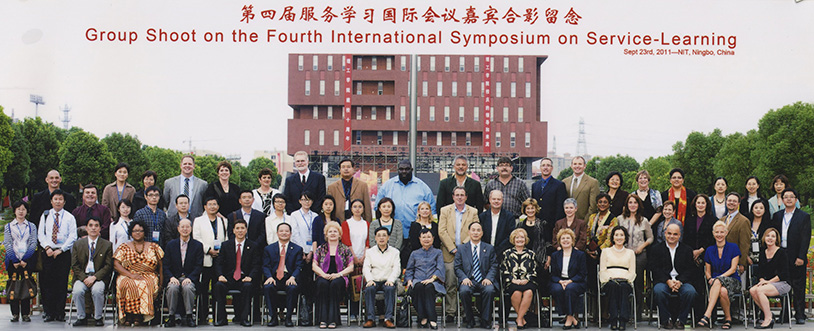
In the Fourth International Symposium on Service-Learning (held in China, September 23-25, 2011) Proceedings, Dr. Lin noted:
“This year’s conference theme, ‘Service-Learning in Higher Education: Connecting the Global to the Local’ is significant for several points. First, universities in one country send students to another country to work on service-learning projects. Second, universities collaborate internationally through service-learning projects. Third, in a setting such as this, we learn how other countries participate in service-learning initiatives.”
“Through the service-learning publications, these symposia, and faculty-led service-learning courses and projects, we hope and expect that service-learning will become institutionalized in higher education. With the interaction of overseas participants and with the local Chinese participants, we will be able to make both local and international connections.”
“Service-learning, which combines the best of the teaching and service sectors, has proved to be a powerful and practical methodology and tool with far-reaching implications. Two separate yet interrelated goals—community engagement and student learning—set the nature and structure of a service-learning program in higher education.” —Preface and Acknowledgment, The Fourth International Symposium on Service-Learning: Connecting the Global and Local Proceedings, 2011, p. 6
Connecting the Global to the Local. Mark Drnach who wrote the Foreword for Service-Learning in Higher Education: Connecting the Global to the Local said, “Over the past several years Dr. Phylis Lan Lin has labored to bring together academics from various educational programs located throughout the world to present and share a cornucopia of ideas and courses at four different international symposia on service-learning in higher education. Through her vision and guidance she has fostered an international community of academics who share a belief in the effectiveness and value of service-learning.” —Service-Learning in Higher Education: Connecting the Global to the Local 2013, Co-edited by Phylis Lan Lin and Mark R. Wiegand, pp xi-xii
Related links:
- 2009 Third International Symposium Athens Greece University of Indianapolis Press
- Service Learning in Higher Education Paradigms and Challenges Edited by Mary Moore and Phylis Lan Lin
Under the sponsorship of Asian Programs at the University of Indianapolis, and of Franklin College, scholars from around the world have convened since 1987 in Central Indiana sharing their observations, studies, and research on mainland China and Taiwan in transition. Dr. Lin co-chaired six International Symposium on China and co-edited China in Transition: Selected Essays (1996) after the fifth Symposium.
Related links:
Publications with Long-lasting Impact. Although not a political scientist by training, Dr. Lin engaged with international issues in her writings and through her organization of the international symposium on China. For example, she wrote in the Preface in 1996 in China in Transition: Selected Essays:
“The presidential election in March 1966 marked full-fledged democratization in Taiwan…Today democracy is becoming a way of life in Taiwan, even though there have been “mishaps” in the political arena. The ‘Lee Teng-hui’ era in Taiwan is full of promises and resilience.”
“The measurement of the quality of social life, the degree of political democracy, and progress in the economic development of Taiwan and mainland China become more objective and apparent on a comparative basis. Therefore, this introductory Reader on selected issues concerning mainland China and Taiwan in transition is extremely timely. We hope this Reader can shed light on pertinent issues on changing China and enable us to generate a dialogue and a common “faith” to enhance an ordered, healthy, and rational Chinese society in the Pacific Basin.” —p. ix.
US-Saudi Arabia Relations Conference. In 2011, Dr. Lin and Dr. Winberg Chai, President of Wang Yu-fa Foundation, convened a national conference on U.S.- Saudi Arabia relations on the campus of UIndy. The Conference aimed to increase understanding and dialogue of citizens of the U.S. and Saudi Arabia to promote world peace. Subsequent conferences were held in Chicago and LA. Dr. Lin was invited to deliver a keynote speech on “How to Decrease Islamophobia on U.S. Campuses? Implications for the Future of U.S.—Saudi Educational Exchange” which was included in Why the U.S. Still Needs Saudi Arabia: Proceedings of the Conference on U.S.—Saudi Relations (2015). Dr. Lin was the co-editor of this book.
In “How to Decrease Islamophobia on U.S. Campuses? Implications for the Future of U.S.—Saudi Educational Exchange” (pp. 53-72), Dr. Lin pointed out that the U.S.—Saudi Education Exchange program is “bidirectional” in that Saudi students benefit from the opportunity to study and live in America, and the United States prospers in cultural diversity on college campuses and the contributions of tuition from international students. Dr. Lin further explained that “international education provides Saudi students with the skills to build relationships between people and communities as well as helps to foster cultural understanding between countries. This exchange is not without challenges. Many Saudi students experience problems adjusting to the new environment.
View promotional poster for the National Conference on U.S.-Saudi Arabia Relations (Oct. 2011)
International Students’ Challenges. Specifically, they experience difficulties in interacting with American students due to language and communication barriers, as well as due to living arrangements and limited food choices. It is important that American colleges and universities make an effort to better welcome and incorporate Saudi students into their campus communities”(p. 53). In the article, Dr. Lin laid out a few blueprints for U.S. colleges and universities to enhance Saudi students’ positive experience in the U.S. Programs such as (1) promote cultural understanding exchange events on campus and in the community, (2) create academic success programs on campus, (3) connecting international alumni, etc. Dr. Lin has devoted herself to international education. In addition to establishing academic exchange programs with universities in China and Taiwan, Dr. Lin recent published two papers: “Beyond 2018: Goals and Challenges of America’s Higher Education” (2018) and “Trends of Internationalization in China’s Higher Education: Opportunities and Challenges” (2019) that have received wide readership around the world.
Service-Learning International Symposia in Several Continents. Professor Lin co-organized and co-chaired the five International Symposiums on Service-Learning which were held in Stellenbosch, South Africa; Indianapolis, USA; Athens, Greece; Ningbo, China and again in Stellenbosch, South Africa. Under Dr. Lin’s direction, five books on service-learning were published after the symposia by the University of Indianapolis Press, and three of them were edited by Dr. Lin. Interviewed in 2009 about the third International Symposium on Service-learning scheduled for November 22 – 24 at UIndy’s campus in Greece she said “the upcoming symposium of more than 165 representatives from 65 universities and other institutions of higher education in 10 countries and the United Kingdom will focus on service-learning approaches, curriculum building, research and assessment. “We want to know what are the learning outcomes,” she said.
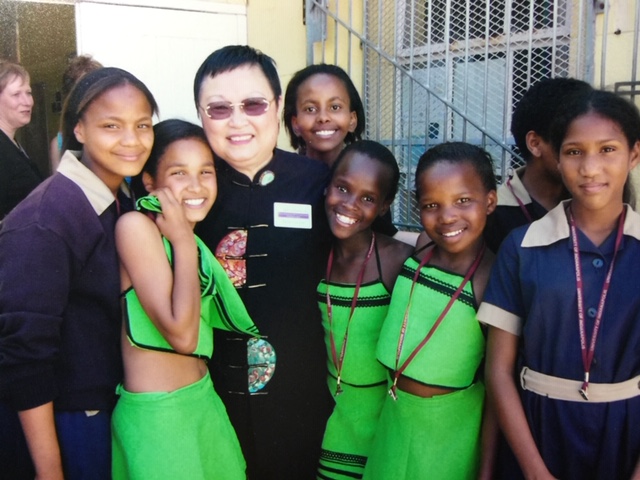
Impacting Lives Through Service-Learning. Service-Learning programs offer class credit for involvement in projects to benefit the community. Lin said UIndy service-learning projects have included rebuilding homes in New Orleans after the devastation of Hurricane Katrina, clothing and art projects in Belize, and kitchen work for a charity in the Indianapolis area that provides meals to the homebound. “UIndy professor excels in meeting many challenges Symposium in Greece on agenda.” —October 8, 2009, William J. Booher, The South Indy Star
The Service-Learning Symposia circled the globe: “Dr. Lin has created and led the International Symposiums on Service-Learning (ISSL) for about 10 years. The symposiums are hers and our institution's global mark for civic responsibility and service-learning in higher education. They have traveled from the USA to South Africa, to China to Greece and the latest one to Ireland. In addition to the many students' lives that I witnessed Dr. Lin positively impact, through ISSL I also witnessed the impact that her passion about her work and positive social change through higher education has had on hundreds of professionals from all over this world. It is truly inspiring to watch her lead through her committed service, great vision, deep knowledge, and huge love of others.” —Marianna K. Foulkrod, Director of Service-learning & Community Engagement, Shaheen College of Arts & Sciences, University of Indianapolis Torchbearer Award Nomination 2017
International Education Month at UIndy. In October 2017, Professor Lin collaborated across the University to present International Education Month at UIndy. With support from the University of Indianapolis Shaheen College of Arts and Science and Asian Programs events were held throughout the month: concerts, films, lectures and the first West Meets East Forum: Cultural Competence Return on Investment. The Third West Meets East concert featured UIndy faculty guest performers presenting classical and contemporary traditional and folk music from East and West. A visiting Artist, Carol Ng, presented the Art of Chinese Ink Brush Painting and a collaboration with Dr. Gerburg Garman, UIndy, contrasting Chinese and Modern European painting. Together with the traditional UIndy Celebration of Flags and International Expo it celebrated UIndy as home to students from 44 states and 68 countries, with international students comprising 9% of undergraduates and nearly 7% of graduate students, the minority and international enrollment represented 25% of the student body. —October 11, 2019, Opening Remarks by Dr. Phylis Lan Lin at the Suicide and Suicide Prevention across Cultures Forum
Related links:
“Intellectual Life, International Life, may these activities and programs result in what we know will be beneficial for future success in all fields, increased interest and participation in study abroad opportunities for students; awareness of how cultural competence, gained locally and globally, can benefit their studies and add value to their career preparation, and an increased appreciation for the contributions of international members and initiatives at our university and in the local community.” —October 5, 2017, Cultural Competence: Return on Investment Forum, UIndy Phylis Lan Lin
A mayoral proclamation was issued in honor of the 2017 International Education Month:
Whereas, the University of Indianapolis (UIndy), founded in 1902, enrolls 5,500 students on the main campus in Indianapolis, including approximately 1,400 graduate students and is ranked in the top tier of "Best Colleges 2017" for regional Midwest universities by U.S. News & World Report, offering 109 undergraduate degree programs, 37 master's degree programs and six doctoral programs;
Whereas, UIndy’s mission is to prepare its graduates for effective, responsible, and articulate membership in the complex societies in which they live and serve, and for excellence and leadership in their personal and professional lives;
Whereas, UIndy’s International Division and International Partnerships report that the university’s international student population has grown steadily over the past 26 years, from 72 international students in 1989 to 526 enrolled in 2015-16, a 635% increase and 44 states and 68 countries are represented among students on campus where nine percent of undergraduates and nearly seven percent of graduate students are international students;
Whereas, UIndy has extensive international relationships that promote awareness, appreciation and understanding of other cultures and UIndy’s study abroad numbers have increased to 249 students abroad in 2015-16, a 26% increase that demonstrates students’ interest in seeking out opportunities to expand their cultural competencies;
Whereas, UIndy’s enrollment reflects 25 percent international and minority enrollment and has 45 international faculty and staff, a truly international community that fosters awareness of diverse cultural and global perspectives plus an appreciation and respect for other cultures, ethnicities and religions;
Whereas, Asian Programs has engaged in hosting cultural enrichment events and programs that bring Asia to UIndy and UIndy to Asia further developing the significant and growing partnership programs with institutions in Asia;
Whereas, UIndy departments and university leadership have collaborated on hosting UIndy’s first International Education Month in October 2017 that will showcase international engagement and offer opportunities for students to learn about different cultures while acquiring cultural competencies around internationalism, globalization and diversity.
NOW, THEREFORE, I, JOSEPH H. HOGSETT, MAYOR OF THE CITY OF INDIANAPOLIS, DO HEREBY PROCLAIM OCTOBER, 2017 AS:
INTERNATIONAL EDUCATION MONTH AT THE UNIVERSITY OF INDIANAPOLIS
SEAL AND SIGNATURE
View Photo of the Proclamation
West Meets East Culture and Health Forums. The Department of Social Work takes the lead in organizing the West Meets East Culture and Health Forums. In 2018, Dr. Lin convened a multidisciplinary planning team representing key disciplines and professional schools within the University of Indianapolis to work in collaboration with Community Health Network to present the 2018 Forum: West meets East: Health and Culture. The West meets East: Culture and Health Forum was presented with the support of an Interdisciplinary Grant from the University of Indianapolis Office of Interdisciplinary Programs and Service Learning and as part of the 2018 International Education Month.
“The influence of culture on health is vast. It affects perceptions of health, illness and death, beliefs about causes of disease, approaches to health promotion, how illness and pain are experienced and expressed, where patients seek help, and the types of treatment patients prefer.” –How Culture Influences Health - Caring for Kids New to Canada
Therapists, doctors, students, and laypeople alike, deserve the myriad benefits of inter-professional and multi-cultural care exposure. Whether a professional is providing care for a client or a student is learning how to provide future clients with best practices, it is paramount to help these individuals learn the importance of moving beyond embracing cultural competence to promoting true cultural equity. Cultural competence/fluency is an important skill, that when practiced effectively, works in a system with decisions, beliefs, and attitudes supporting cultures and cultural identifiers. Cultural equity, under the assumption of cultural relativism, is the belief that all people in all settings have the right to have, embrace, and fulfill their intellectual, psychological, material, and spiritual traditions. This Forum will enhance participants’ global cultural understanding and enhance effective communication and practice in their respective fields. –2018 Program West Meets East: Culture and Health Forum
Multi-disciplinary programs presented across the university continue the celebration of International Education Month at UIndy. The 2019 West Meets East Forum III: The Experience of Suicide and Suicide Across Cultures engaged university and community partners to focus on the experience of suicide and suicide prevention across cultures. State-wide leaders in suicide prevention joined health and social work practitioners serving diverse ethnic populations and K-12 and university mental health directors to inform and inspire an audience of educators, students and community partners to greater awareness and to take action related to this pertinent issue. Vital questions addressed by speakers and panelists included:
- What are the programs available to educators and community partners in Indiana that go beyond suicide intervention to suicide prevention?
- What can we learn from research on suicide prevention and intervention in China to apply to diverse communities in Indiana?
- How and what can we learn from other cultures to prevent suicide and intervene after suicide?
- How can we support survivors of suicide on our campus, in our communities, and across the globe?
- How can we empower our campus, our community and our country to address suicide prevention?
- What can survivors and family members teach us about recovery, celebration of life and bereavement support?
Department of Social Work faculty took the lead as presenters and moderators, joined by UIndy’s Provost, Dr. Stephen Kolison, Associate Provost, Dr. Jodie Ferise and Reverend Arionne Williams for inspiration that helped move participants toward the forum goals: exploring the global impact of culture on suicide and suicide prevention; pushing beyond standard prevention training to look at suicide through a global lens; and empowering attendees to better support survivors of suicide on campus, in their communities and across the world. Presenters and participants shared a common understanding of the need to individually and collectively advocate, support and lower barriers to improved mental health care.
Education Beyond Campus. The Indianapolis community has benefited from Professor Lin’s engagement and willingness to share cultural knowledge through lectures to campus and outside communities on topics related to Chinese culture and society and leadership/innovation/organizational development. For instance, the topic for 2011 was "Food in Chinese Culture: A Sociological Perspective,” the topic for 2012 is “The Dragon Legend in China through Chinese Art (Jade, Bronze, Porcelain, and Folk Art),” the topic for 2013 was on “Innovation and Innovation Management”, the topic in 2014 was “Beyond Thinkers 50: Thoughts on Leadership, Innovation, Strategic Planning, and the Future of Work.”
The topic for 2015 was “The Five “Fs/Hs”, the Proactivity Model, and Stress Management: Conceptualization on Successful Aging,” the topics for 2016-2017 were “Exploring the Dynamics of Change in Organizations,” “Chinese Concepts of Health and Illness Behavior,” and “Megatrends and the Future of Work,” and the topics for 2018 were “Values and Ethics in Organizational Development” and “The Sociological Significance of Technology: How Technology Changes Social Life.”
“Old Girl’s Club.” At the start of the 21st Century, in September 2000, Phylis Lan Lin was recognized by the Indianapolis Business Journal in IBJ’s unofficial list of ‘old girl’s club’ members, one of the 33 Most Influential Women in Indianapolis. She was the only Asian American on the list. She joined the ranks of women leaders from various fields, including Christel DeHaan.
Read article: Indianapolis Business Journal Women of Influence (2000)
The IBJ interviewed and profiled Professor Lin:
“Phylis Lan Lin knew what she needed to survive in America: a can opener and a television – the former because, coming from a Taiwanese family with servants, she had never cooked, and the latter because “If I understood the jokes and news on television, I’d enjoy this country.” Lan Lin said.
It was a quest for more education that caused her to leave home in 1966. “I thought America could provide better training.” she said.
“One, I was to devote myself to this nation and two, I was not to forget my heritage,” she said. Lan Lin has written books in Chinese and English, organized numerous international conferences and created a University of Indianapolis social work program named “The Phylis Lan Lin Program in Social Work.” In 1990 Lan Lin received a congratulatory letter from President George Bush on her organization of the “International Symposium on China.” Her “International Symposium on Families: East and West” brought recognition from Mayor William H. Hudnut, III. He named July 20, 1991, “Dr. Phylis Lan Lin” Day.
In her spare time she studies Chinese art.
Lan Lin has also survived breast cancer and through it all, she never missed one day of school.
“I learned to take charge,” she said. “I learned to see whatever happens as a challenge.”
Her advice to immigrants is to take risks and put forth more effort. “Find your niche and then how you can stand out,” she said.
“America is a big country and …there are many segments,” she added. “Don’t just stay in one place the whole time. Enjoy this country.” —Laura Goodpaster Indianapolis Business Journal September 4-10, 2000
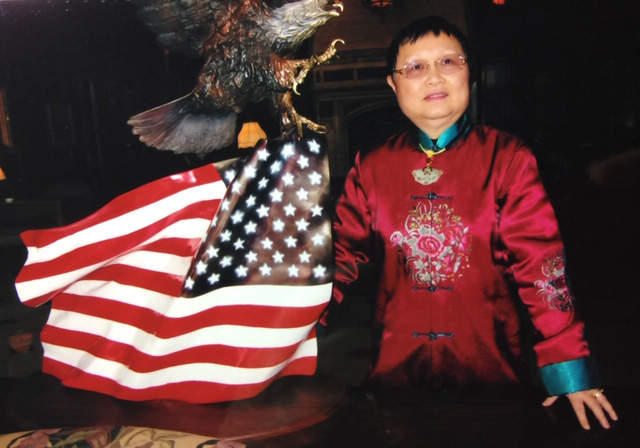
A Professor for All Seasons. Professor Lin graced the cover of Asian Access Magazine as one of Indiana’s Asian American Heroes. Professor Lin has been described as ‘much more than her accomplishments. She is a mixture of modesty, humility, passion, energy, dedication, vision and humor’ and ‘a lady with a big heart, deep compassion, high spirit, far vision, overwhelming energy, unfathomable generosity and a worldwide influence…a woman who gives all of herself and engages in life fully to make a difference in everything she does…’ —Asian Access, May-June 2007
Dr. Lin was honored in 2014 among the “Living Legends of Indiana’s Chinese American Community” for her contributions to education and international cooperation. The honorees were recognized during the 10th anniversary gala of the Indy Asian American Times newspaper. Dr. Lin also received a letter of congratulations from Lt. Gov. Sue Ellspermann.
“2014 Sociology Professor Named among ‘Living Legends of Indiana’s Chinese American Community.” “I started teaching at UIndy in 1973. There is no way for me to share all the joyful interaction I have had with students and colleagues over the years. It takes a village to raise a child, and it takes a village to create a legend.” —Professor receives Living Legend Award “ October 8, 2014. The Reflector.
Related links:
- 2014 The Reflector: Professor received Living Legend Award
- 2014 Professor honored among Living Legends
She was introduced at the event by her daughter Toni Lin, a local surgeon, who described her mother as a prolific author and organizer of international symposia who lives by the principle of “VIP”: vision, integrity and passion.
“She is living proof that an Asian-American female can rise to become a leader and an amazing role model for her daughter and community.”
Being an Immigrant. Professor Lin proudly shared her cultural knowledge on campus and throughout the Indianapolis community. Speaking to a women’s leadership group in 2005, she displayed her sense of humor.
“I call myself a Chinese-American. I wear Chinese outfits 90 percent of the time. It gives me my ethnic identity but it is also the kind of outfit I feel most comfortable in. I eat both Chinese and American food. So I have gained 30 pounds since I arrived in America 39* years ago… I would love to share with you many more stories about my educational experiences and my work-life adventures. But I have to sum it up here. As an immigrant and short woman, I think education is my best asset, family is my best anchor, work is my best identity, and most of all, my cultural heritage is my best asset.” —Northwood Women’s Salon Connecting Cultures Seminar Thursday, September 29, 2005 “Education and Work Life: A Chinese Immigrant’s Experience”
Dr. Phylis Lan Lin is a prolific writer, public speaker, and researcher, author of more than 30 Books and scores of scholarly articles in English and Chinese.
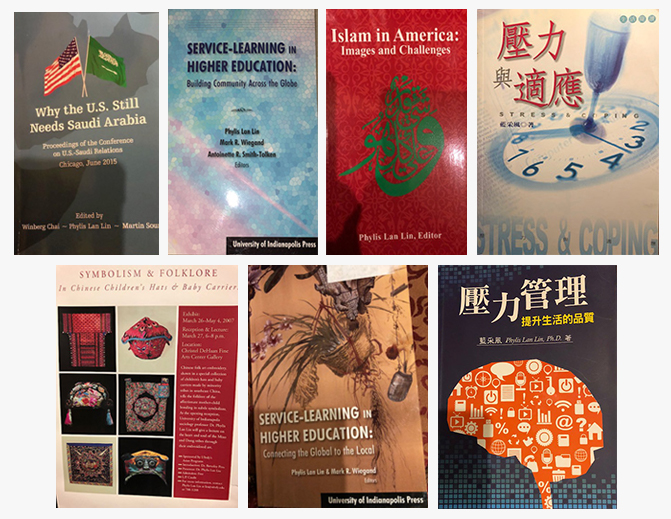
Beyond Teaching. Dr. Lin continues to do research in the general areas of work, global organization, leadership, stress management, aging, marriage and family, and international students’ American experience. A native of Taiwan, she has presented numerous workshops and lectures in Taiwan and mainland China since 1976. A prolific writer in various subjects, she is the author and co-author of many monographs and books (in both Chinese and English), including Crisis Intervention: Theory and Application; Marriage and the Family; Integrated Women; Child Welfare: Foster Care and Social Work; Organizational Behavior; Chinese Children’s Hats: Symbolism and Folklore; Sociology; Stress and Coping; Medical Sociology; Stress and Management: A Total Approach; and Operational Flexibility: Aging and Retirement in China.
She edited Families: East and West; Marriage and the Family in Chinese Societies: Selected Readings; Selected Readings on Marriage and the Family: A Global Perspective; Islam in America: Images and Challenges; and Service- Learning in Higher Education: Paradigms & Challenges. She has presented at more than 60 conferences in the United States, Taiwan, mainland China, South Africa, and Europe. Dr. Lin has also chaired and presented papers at many sessions at professional conferences, including the 2000 Annual Joint Conference of three Chinese-American associations in Indiana; the 2001 Indiana Council on Family Relations’ annual conference; and the Asian Studies Session of the Western Social Science Association annual conferences in 2003, 2004, and 2016.
Books in English
- Families: East and West (Co-editors: Winston Y. Chao, Terri L. Johnson, Joan Persell & Alfred Tsang), Indianapolis: University of Indianapolis Press, 241pp.
- Marriage and the Family in Chinese Society (co-editors: Ko-wang Mei & Huai-chen Peng) Marriage and the Family: A Global Perspective (Co-editor: Wen-hui Tsai), 372 pp.
- Stories of Chinese Children’s Hats: Symbolism and Folklore (Co-author: Christi Lan Lin), Indianapolis: University of Indianapolis Press, 64 pp.
- China in Transition: Selected Essays (Co-editor: David Decker), Indianapolis, University of Indianapolis Press, 103pp.
- Islam in America: Images and Challenges (Editor), Indianapolis: University of Indianapolis Press, 155pp.
- Operational Flexibility: A Study of the Conceptualizations of Aging and Retirement in China (Co-editor: Cheng Fang). Indianapolis: University of Indianapolis Press. 66pp
- Journey with Art Afar: Au Ho-nien Museum Catalog (Editor). Indianapolis: University of Indianapolis Press. 71pp
- Service-Learning in Higher Education: Paradigms & Challenges (Co-editor: Mary Moore). Indianapolis: University of Indianapolis Press. 410pp
- Service-Learning in Higher Education: National and International Connections (Editor). Indianapolis: University of Indianapolis Press. 288pp
- Service-Learn in Higher Education: Connecting the Global to the Local (Co-editor: Mark R. Wiegand). Indianapolis: University of Indianapolis. 316pp
- Service-Learning in Higher Education: Building Community across the Globe (Co-editors: Mark R. Wiegand and Antoinette Smith-Tolken). Indianapolis, University of Indianapolis Press. 292pp
- Why the U.S. Still Needs Saudi Arabia: Proceedings of the Conference on U.S.—Saudi Relations, Chicago, June 2015, 136 pages (Co-editors: Wingberg Chai and Martin Sours) People to People Association. 136pp.
Books in Chinese
- 1976. 《危机调适与理论》 (Crisis Intervention: Theory and Application). Taipei, Taiwan: Young Lion Cultural Enterprise. 283pp
- 1977. 《儿童福利研究:寄养家庭与社会工作》 (Child Welfare: Foster Care and Social Work). Taichung, Taiwan: Christian Children’s Foundation. 224pp
- 1978. 《药物问题的社会观》(Social Aspects of Drug Use). Taipei, Taiwan: Maw Chang Book Co. 230pp
- 1978. 《医疗社会学的領域》 (The Field of Medical Sociology). Taipei, Taiwan: Hong Jienquan Education Foundation. 106pp
- 1979. 《婚姻关系与适应》 (Marital Relations and Adjustment). Taipei, Taiwan: Teacher Chang. 84pp
- 1979. 《夫妻溝通訓練手冊》 (Couple Communication Training Manual). Taipei, Taiwan: Teacher Chang. 89pp
- 1979. 《親子溝通訓練手冊》 (Parent-Child Communication Training Manual). Taipei, Taiwan: Teacher Chang, 91pp
- 1982.《生活的压力与适应》 (Stress and Coping) (3rd edition in 1986). Taipei, Taiwan: Young Lion Cultural Enterprise, 204pp
- 1982.《亲职与家庭生活》 (Parenting and Family Life) (co-author: Lungli Liao) (2nd edition in 1985.)Taipei, Taiwan: Teacher Chang, 118pp
- 1984/1990.《医疗社会学》 (Medical Sociology) (co-author: Lungli Liao). Taipei, Taiwan: Sanming Publisher, 319pp
- 1985.《台湾的社会工作教育》 (Social Work Education in Taiwan) (co-author: Lungli Liao). Taipei, Taiwan: Lungli Liao, 207pp
- 1986.《婚姻关系与适应》 (Marital Relations and Adjustment). Taipei, Taiwan: Young Lion Cultural Enterprise Publisher. (First edition1982; this is the 4th and extended edition). Taipei, Taiwan: Teacher Chang. 237pp
- 1987.《健康的家庭生活》 (Healthy Family). Taichung, Taiwan: Taiwan Provincial Social Welfare Training Center, 322pp
- 1987.《失的经验:化悲痛为力量》 (The Experience of Loss: Turn Grief to Courage), Taipei, Taiwan: Genchun Publisher, 161pp
- 1990.《医学社会学》 (Medical Sociology) (co-authors: Qinyuan Lou and Junsong Guo)China: Zhejiang University Press, 268pp
- 1994.《组织行为学》 (Organizational Behavior) (Co-author: Lungli Liao.)Taipei, Taiwan: Wunan Publisher, 553pp
- 1996.《婚姻与家庭》 (Marriage and the Family). Taipei, Taiwan: Young Lion Cultural Enterprise Publisher, 298pp
- 2000.《社会学》 (Sociology). Taipei, Taiwan: Sanming Publisher, 670pp
- 2000.《压力与适应》 (Stress and Management). Taipei, Taiwan: Young Lion Cultural Enterprise Publisher, 331pp
- 2000.《挑战压力》 (Challenging Stress; Tiao Zhan Yali). Beijing: China Textile Publisher, 326pp
- 2003.《全方位压力管理》 (Holistic Stress Management). Taipei, Taiwan: Young Lion Cultural Enterprise Publisher, 328pp
- 2011.《服务-学习:在高等教育的理论与实践》 (Service-Learning in Higher Education: Theory and Practice) (Co-author: Weimin Xu), 257pp
- 2014.《压力管理:提升生活的本质》 (Stress Management and the Quality of Life). Taipei, Taiwan: Young Lion Cultural Enterprise Publisher, 315pp
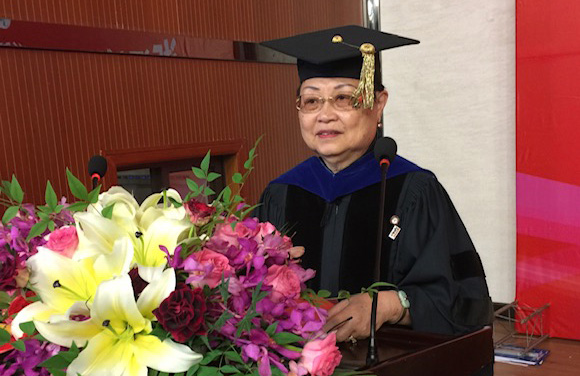
The University of Indianapolis Press. In 2003 the University of Indianapolis Press was formalized and Dr. Phylis Lan Lin was appointed executive director. “The press, which had published 13 books and one series since its inception, was founded in 1991 by Dr. Phylis Lan Lin, director of Asian Programs, the director of graduate applied sociology programs, Presidential International Ambassador and newly appointed executive director of the University of Indianapolis Press because she felt that there was a need for a publisher for faculty writings. “I consider the Press a tie in with our university’s mission in teaching, scholarship and service.” Lin said. “University of Indianapolis press: a newly formalized institution” The Reflector, November 5, 2003. The University of Indianapolis Press was operational through 2014. It published more than 40 books and left a surplus of funds for the university.
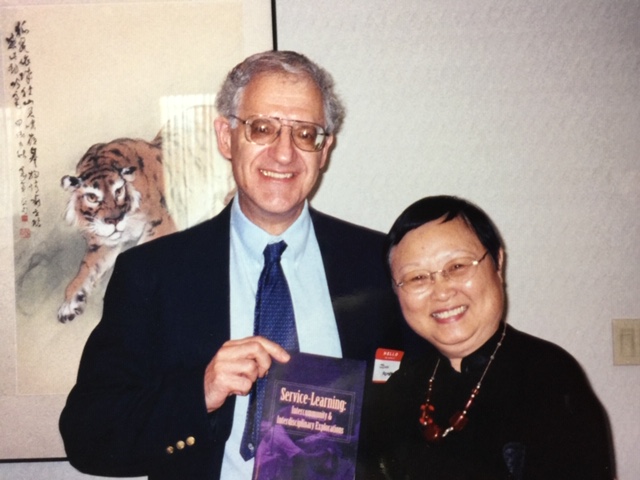
“Sociology Professor Phylis Lan Lin has been appointed executive director of the press which she initiated in 1991 to fulfill a need for a publisher of books and monographs that she and others were producing in Asian Studies." [...] "We are committed to disseminating research and information in pursuit of the goals of scholarship, teaching and service." Lin said. "Because we are a global university, with sister institutions throughout Asia and the Mediterranean, we would like to concentrate on books of multinational interest." University President Jerry Israel said, "A university press is both a service and a symbol. It is a service in that it provides an important outlet for scholars who contribute to their professions and to the store of the world's knowledge by publishing their work. It is a symbol in that it has stood for centuries as a model of academic freedom and the unfettered pursuit of truth. This freedom is the lifeblood of a university and, indeed, of a society." —October 1, 2003, Indianapolis Star
During her tenure as the Executive Director of the University of Indianapolis Press, Dr. Lin not only oversaw the entire publication process, but also authored, co-edited and co-authored numerous books to further fulfill its mission. Dr. Lin had organized and chaired more than 15 national and international conferences. The peer reviewed proceedings and books were published after the conferences as a result of the university press providing opportunities for the publications. As Dr. Lin acknowledged in Families: East and West Preface (the collection of papers from the first international symposium on Families: East and West, 1992):
“The publication of a journal of the proceeding is to further fulfill the objectives of the symposium. It has been our hope through cross-cultural and interdisciplinary approaches, we can better understand the dynamics of family values in order to address the various societal issues. The conference heralds the beginning of our pursuit and this book supports the continuity of our work.” —Families: East and West, 1992, p. viii
Related links:
- Autobiography of Ba Jin Translated by May-lee Chai
- Muslims in China By Aliya Ma Lynn Translated by Phylis Lan Lin and Cheng Fang
- The Other Middle Kingdom A Brief History of Muslims in China by Chiara Betta Translated by Phylis Lan Lin and Cheng Fang
Examples of international conference proceedings published by Dr. Lin with the University of Indianapolis Press:
- 1992. Families: East and West (Co-editors: Phylis Lan Lin, Winston Y. Chao, Terri L. Johnson, Joan Persell & Alfred Tsang), Indianapolis: University of Indianapolis Press, 241pp.
- 1992. Families: East and West (Co-editors: Phylis Lan Lin, Winston Y. Chao, Terri L. Johnson, Joan Persell & Alfred Tsang), Indianapolis: University of Indianapolis Press, 241pp.
- 1994. Marriage and the Family in Chinese Society (co-editors: Phylis Lan Lin, Ko-wang Mei & Huai-chen Peng) Marriage and the Family: A Global Perspective (Co-editor: Wen-hui Tsai), 372 pp.
- 1996. Stories of Chinese Children’s Hats: Symbolism and Folklore (Co-authors: Phylis Lan Lin & Christi Lan Lin), Indianapolis: University of Indianapolis Press, 64 pp.
- 1997. China in Transition: Selected Essays (Co-editors: Phylis Lan Lin & David Decker), Indianapolis, University of Indianapolis Press, 103pp.
- 1998. Islam in America: Images and Challenges (Editor: Phylis Lan Lin), Indianapolis: University of Indianapolis Press, 155pp.
- 2004. Operational Flexibility: A Study of the Conceptualizations of Aging and Retirement in China (Co-authors: Phylis Lan Lin & Cheng Fang). Indianapolis: University of Indianapolis Press. 66pp
- 2004. Journey with Art Afar: Au Ho-nien Museum Catalog (Editor: Phylis Lan Lin). Indianapolis: University of Indianapolis Press. 71pp
- 2009. Service-Learning in Higher Education: Paradigms & Challenges (Co-editors: Phylis Lan Lin & Mary Moore). Indianapolis: University of Indianapolis Press. 410pp
- 2011. Service-Learning in Higher Education: National and International Connections (Editor: Phylis Lan Lin). Indianapolis: University of Indianapolis Press. 288pp
- 2013. Service-Learn in Higher Education: Connecting the Global to the Local (Co-editors: Phylis Lan Lin & Mark R. Wiegand). Indianapolis: University of Indianapolis. 316pp
- 2014. Service-Learning in Higher Education: Building Community across the Globe (Co-editors: Phylis Lan Lin, Mark R. Weigand & Antoinette Smith-Tolken). Indianapolis, University of Indianapolis Press. 292pp
Teaching by Learning; Learning by Teaching. “Working with you has reminded me to “Realize your inadequacy in knowledge after learning, and acknowledge your questions of knowledge after teaching” “(“教然後知困;學然後知不足”). Learning and teaching are intertwined and are reciprocal (“教學相長”). I have taught you a lot, and I have learned a lot from you as well. I am glad we have grown together. We have learned together to be wiser and older!” —Commencement Speech to the Graduates University of Indianapolis–Ningbo Institute of Technology, Zhejiang Joint University Program, June 18, 2017
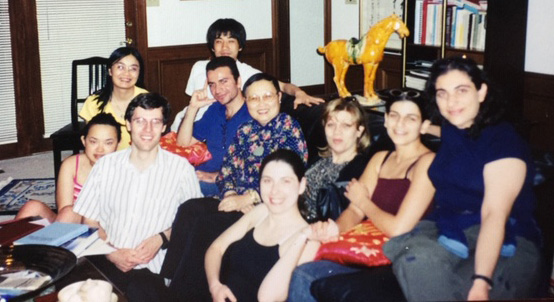
Research on the Meaning of Work. Dr. Lin has been interested in the sociological and social psychological studies of work and self since she started working on her dissertation on “Chiropractors, Chiropractic, and Process: A Study of Sociology of Occupations and Professions” in 1970-1972. Dr. Lin was invited to do a keynote speech at the International Association of Personnel in Employment Security and the Indiana Employment Security Division’s conference on October 15, 1983. Dr. Lin explained that her “work and self” concept identifies work as a fundamental aspect of the human experience. Dr. Lin posits that: “A person’s work is one of the things by which he/she is judged, and certainly one of the more significant things by which one judges himself/herself. A person’s work is one of the more important parts of his/her social identity.”
Dr. Lin continued, “Work holds meaning for the individual and the society. The meaning of work and the sources of workers’ motivations have changed……Today, the meaning of work is seen as a means to provide continuity to a person’s self-image, as a process by which people express their individuality and their integration into the larger society.” Speaking on the topic of “Socio-Psychological Effects of Unemployment,” Dr. Lin observed that, “Today we expect work to supply us not only with a means of livelihood, but also with personal satisfaction, gratification, and social identity. Therefore, to lose a job quite often signifies a loss of a reason to live, a loss of self-identity, a loss of some aspects of personal functioning and a loss of the organization of the routine of daily life. It is a loss of the total being.” Unemployment is not only a financial crisis, it is also an emotional and social crisis. Dr. Lin recommended that intervention for the unemployed should also include a session on dealing with the emotion of grief. —Lin, October 5, 1983
Megatrends and the Future of Work: Implications for Organizational Development Leadership.
“The best way to predict your future is to create it.” —Abraham Lincoln
Who knows what jobs will evolve one decade or two decades from now? The world is changing, and the speed at which it is changing is moving faster and faster. The changes will affect all walks of life. Some predictable social forces (megatrends)— to include globalization, digitization, technological developments, demographic changes, environmental crises, urbanization, the rise of the middle class, and individualization—will create new economic opportunities, challenges, and disruptions for all of us, especially for Millennials (Generation Y). Social media drives new forms of work relations and value creation. Furthermore, increased global interconnectivity and collaboration put diversity and adaptability at the center of organizational operations.
Dr. Lin is a sociologist specialized in the Sociology of Complex Organization and Organizational Development, and as such has recently been invited to present special lectures and workshops on “Megatrends and the Future of Work: Implications for Organizational Development Leadership” in China, Taiwan, Thailand, Myanmar, and Cambodia. The purpose of her presentations was to identify some of these megatrends and to analyze how megatrends will impact the meaning of work and the future of work for a multigenerational and diverse workforce. The presentation begins by illustrating how those megatrends might shape the nature of work patterns and work demands (jobs and skills) in the future. Secondly, it attempted to shed light on how to prepare Millennials for future challenges at work and ends with engaging participants in a discussion of new technologies and other megatrends’ implications on organizational development leadership.
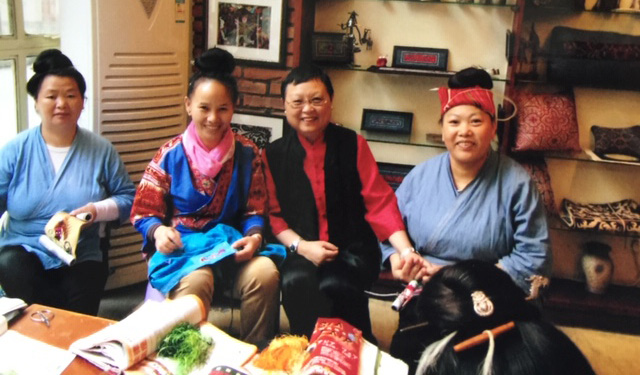
Dr. Lin’s presentation also reflected her teaching style—one that inspires students to think critically. She delineated a list of questions for students as “food for thought and discussions.” Here are some sample questions:
-
Are we able to witness the megatrends in our global society as they have been presented in this workshop in Southeast Asia?
-
How would those megatrends, especially the new technologies, affect your organization?
-
How can leaders use technology to make complex decisions?
-
Why will leaders need to pay special attention to diversity of employees and consumers?
-
What is the demographic structure in your organization? Do you see an increased number of members of Generation Y in your organization? What are the leadership implications of working with Generation Y? If individualism and democracy in emerging societies is a new trend, how can leaders advocate or shared governance and shared values?
-
How will it be possible to lead a multinational organization with the awareness of glocalization and the rise of the new middle class in emerging nations such as China, Thailand, Myanmar, Vietnam, and Cambodia? The demand for glocalization (regional markets) may require more agile organizational structures. How will you implement the new structures and new work patterns in your organization? What new challenges might you encounter in the process of transformation?
-
As business becomes more globalized, leaders must acquire cultural competencies to become effective global leaders. Today’s global leaders build partnerships. Building partnerships is one of the most important competencies for global leaders of the future. How can you overcome cultural barriers and build trusting relationships with your global partners?
-
Environmental crisis is inevitable. Global warming and a growing scarcity of natural resources, such as oil, water, and rare earth minerals, require leaders to exercise transformational thinking and new forms of collaborations. How can leaders convert potential competitors into prospective collaborators?
-
Digitization is a worldwide phenomenon. It has changed our communication modes and hence has changed interpersonal relations. People can work anywhere and at any time. How can leaders prepare themselves for “remote leadership” with virtual working patterns? How can leaders prepare themselves to encounter and comprehend big data and data analytics?
-
Demographic change is primarily a combination of three factors: birth (population growth), death (aging societies), and migration (international mobility). Southeast Asian countries are experiencing an influx of migration from neighboring countries. How can leaders prepare themselves to work with the increasingly complex diverse workforce due to migration (migrant workers)? How can leaders manage diverse teams (gender, age, and ethnicity/religion)?
-
Technological breakthroughs have produced new scientific and technological fields such as nanotechnology, biotechnology, IT, cognitive science, robotics, and artificial intelligence (AI). These fields will prompt innovations in other areas, including healthcare, logistics, nutrition, elder care, industrial production, and more. How can leaders prepare themselves to comprehend complicated data, to commit funds for R&D, and to deal with new ethical dilemmas concomitant with technological advancement?
-
How can we share the latest thinking and trends in how technology can facilitate modern work practices? How can we connect technology and forward thinking in higher education?
-
What is the meaning of work in your career? How will you measure your life?
-
How may we apply Dr. Lin’s VIP (Vision, Integrity, and Passion) Model of Leadership to OD (Organizational Development) leadership?
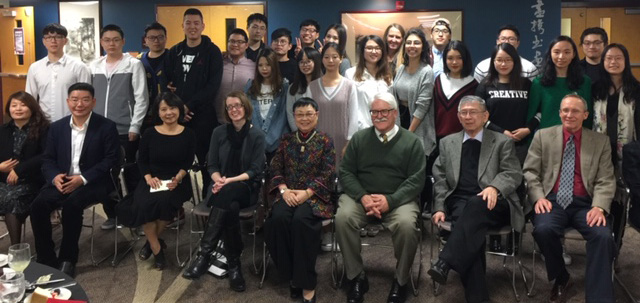
“Work is changing. Digital communications have made remote work commonplace. The gig economy is growing. And advances in AI and robotics could upend the conventional workplace. At least 30 percent of the activities associated with the majority of occupations in the United States could be automated, including knowledge tasks previously thought immune.” —“Harnessing automation for a future that works,” McKinsey Global Institute, January 2017, McKinsey.com
Acknowledging the fact that work is changing, Dr. Lin addressed additional probing questions to the students: “Then, what is the new meaning of work? What does “challenge” mean to you and your coworkers? Although new technologies increase work efficiency, they also disrupt the workplace. What will the company (organization) of the future look like? How can we prepare a future workforce that will be more productive, skilled, and engaged?”
The future of work and the meaning of work (i.e., in search of work and self) might be the next chapter for Dr. Lin’s continuing pursuit of her sociological inquiries. Dr. Lin is a “verb” and her work does not end at retirement.
“Dr. Lin is an ‘Active Verb.’” As Don Frick said in his article about Dr. Phylis Lan Lin in 1979 that “If people were words, Phylis Lan Lin would be a verb….Now the first volume of Crisis Intervention: Theory and Application is ready for release, Dr. Phylis Lan Lin may relax a bit. But don’t bet on it. This ICU professor knows there is always a volume two. Because she is an active, not a passive verb.” —ICU Alumni News, Winter 1979, pp. 20-21