Dr. Phylis Lan Lin's Family and Mentors
Devoted Wife, Mother, Grandmother, Daughter, Sister, Friend, and Mentor
We play many roles in everyday life. We are a product of our role-set. I am a woman, professor, daughter, wife, friend, sister, director, Chinese, senior citizen, consumer, etc. Every role we play is a part of ourselves. We must discover our strengths and our ability to learn.
My childhood provided me opportunities to learn a leader’s qualities, including being a role model, trustworthiness, love, and royalty. My mother is one of the most successful women physicians in Taiwan. I remember she said to us once, “I am the crab. All my nurses are my legs. We must work together in order for the crab to move forward.” This statement has been imprinted in my mind since I was young. I learned that a leader must be a team player, and a leader must work harmoniously with his or her co-workers. My mother treated her nurses just like her daughters. It was a family concept. I have extended this idea of “family” to my work team, or to my students since I started my teaching career 31 years ago.
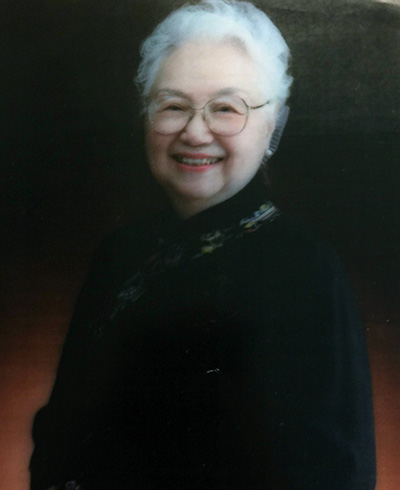
I would love to share with you many more stories about my educational experiences and my work-life adventures, but I have to sum it up here. As an immigrant and a short woman, I think education is my best asset; family is my best anchor; work is my best identity; and most of all, my cultural heritage is my soul.” —“On Leadership” 1-9-04 Women’s Leadership seminar. School for Adult Learning
“Build your support system. In China, we use the term “assisted by precious persons” (贵人相助) to describe one of the most important factors for success. Without these supporters, we could accomplish little. I have been very fortunate to have many of these precious persons surrounding me. I would never claim to have accomplished anything without thanking these “angels” first. Champions are good observers and listeners. The champion is like a “360-degree leader” in a company who is willing to take advice and feedback from all directions. In daily encounters, champions value differences of opinions and lifestyles. When they notice the differences that others uphold, they will pause a minute and seek alternatives. Champions are firm with their principles but flexible enough to consider alternatives.” —“On Becoming a Champion” The 2012 Sino-American Joint Program Commencement Ceremony at the Ningbo Institute of Technology (NIT), Zhejiang, China Ningbo Institute of Technology (NIT) Joint Program Cohort 8, Class of 2012
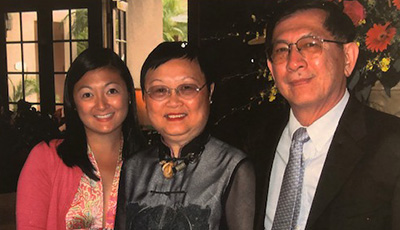
Professor Lin’s accomplishments are all the more noteworthy considering the odds that might have prevented her from excelling at Indiana Central College, now UIndy. President Emerita Beverley Pitts observed “It is important to recognize that Phylis began all of this as a Chinese woman beginning a career when even finding opportunities in higher education for women was not easy. She has fought discrimination, both as a woman and as a minority, by being better and working harder. She rose to leadership through many barriers, but she has never complained about those barriers. She has just kept on being herself.” —Nomination for Torchbearer Award, 2017.
“Her vision, which is to imagine in grand ways, is the opposite of her personal demeanor where she always puts others first before herself. Phylis has been a model servant-leader for me and other women.” —Mary C. Moore, Ph.D, Professor of Sociology, Associate Vice President of Accreditation University of Indianapolis
It was at the University of Missouri where Phylis met her husband, fellow alumnus and native of Tainan, Taiwan, Leon Lin, Ph.D., Aerospace Engineer. In the biography of his father, Leeshui Lin, The Legacy of a Country Doctor, Dr. Leon Lin writes 'Practicing medicine was his profession as well as his passion, he practiced for about 55 years without getting bored. Medicine was his life and his life was his patients. [...] The villagers saw him as the “Living Buddha.” They treated him with honor and respect because of the way he treated his patients, especially the poor patients. He gave them free clinic visits and free prescribed drugs.” —Leon Lin, The Legacy of a Country Doctor, 2006, p. 43
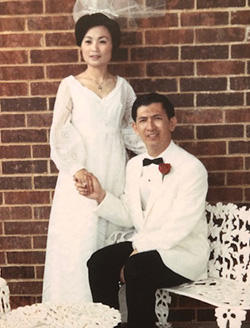
When it came time to ask for Phylis’ hand in marriage, Phylis’ father visited the village where Dr. Lin had practiced and upon hearing their high regard, concluded that his son would be a worthy husband for his daughter. Her ‘American mother’ Nordi Townsend, also gave her stamp of approval: “Two and one half years ago I went there (University of Missouri) to put on her wedding as her American mother. Her husband, Dr. Leon Lin, is an outstanding, intelligent and fine Taiwanese gentleman. He is employed by General Motors, in Indianapolis, as an aerospace engineer.” With the blessings by their parents, the couple were married in 1970.
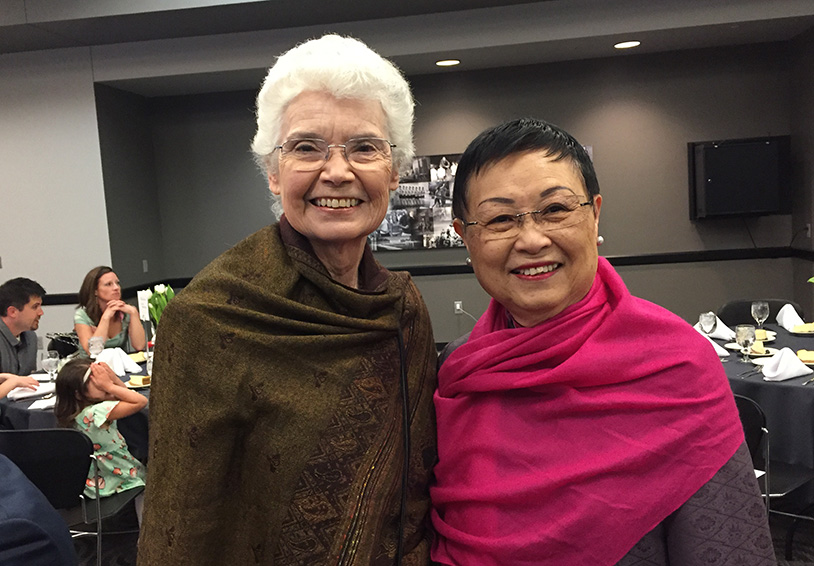
A long-time collaborator and friend, Caterina Blitzer, international education consultant, former Deputy Mayor of Indianapolis and Executive Director of the International Center of Indianapolis, 1995 – 2006, was invited to submit comments for the 2018 recommendation for Professor Emerita status submitted by Dr. Mary Moore and Dr. Amanda Miller:
“My collaboration with Professor Lin began in 1995 as I was asked to recruit a diverse cadre of leaders to serve on the board and set a course for growth and service for the International Center of Indianapolis. Professor Lin led the International Center’s engagement with the growing, increasingly diverse community of Asian citizens attracted to central Indiana for professional and academic opportunities. Thanks to Professor Lin, a number of collaborative cultural events, seminars and symposiums were held on campus, attracting diverse audiences from throughout the community. Professor Lin was a featured panelist at the first in a series of Creating Greater Awareness Forums presented by the International Center of Indianapolis and the Central Indiana Community Foundation to promote cross cultural understanding.
Professor Lin’s scholarship in the field of sociology, passion for Asian arts and culture and leadership in international education, have brought local, national and international attention to her beloved university. Professor Lin’s ability to respectfully engage, and fuse, diverse cultures and art forms, her emphasis on working toward cultural fluency, are the hallmarks of her leadership, on campus and in the community. All who have been her students, colleagues and collaborators, in Indianapolis and around the world, benefit from her generous teaching, scholarly research and leading by example in successfully promoting international partnerships and understanding across cultures.” —Caterina Blitzer January 31, 2018
Indianapolis Woman published a Breast Cancer Handbook in 2003 highlighting Phylis Lan Lin.
“University of Indianapolis professor Phylis Lan Lin found a lump in her breast in 1997. When she told her family doctor, he didn’t think it was significant. Fortunately, she insisted on an x-ray and breast cancer was quickly diagnosed. Her first reaction was “Why me?” Then she thought, “Why not me?”
At the end of her remarks at the 1997 dedication of the Phylis Lan Lin Program of Social Work, Professor Lin expressed this wish: “Finally my dear colleagues and fellow students, now that our child has a name, I beg God to give me another 20 years of life so I have a chance to see this child’s growth, maturity and success.” Earlier in the year she had been diagnosed with breast cancer.
Phylis took charge of her disease by asking for a second opinion, seeking out the best doctors she could find and turning to her family and friends. “Having the best doctors and family support is the secret to surviving.”
Phylis had once made a statement about her coping with cancer. “Do not let cancer claims you; you claim cancer. Resilience, recognizing the challenges before you, find your support system and the best doctors, face it and take charge of it, then you will survive. You are the survivor, not ‘the victim.’ You must have the courage to change the perception of ‘being a victim of a terminal disease’.”
She also told her colleagues and students at the university. “You need help. Don’t be afraid to ask for it.” Phylis was born in Taiwan, a culture where people are far less open about personal issues like cancer. Recognizing the reluctance of Asian women to talk about such things, she wrote Dance with Cancer, an article in Chinese, to show other Chinese speaking women how to be proactive and how to make fighting cancer the most positive experience possible.” —Indianapolis Woman, p. 60. 2003 Breast Cancer Handbook
For any cancer survivor, having a good support systems system (family, medical team, friends and community, etc.) is key to recovery. I am so blessed to have had the best possible support system during my recovery. It is a blessing to have the support of all in my family and my extended family: my husband, daughter, siblings, and in-laws. Their support goes beyond description, it is boundless and absolutely unconditional.
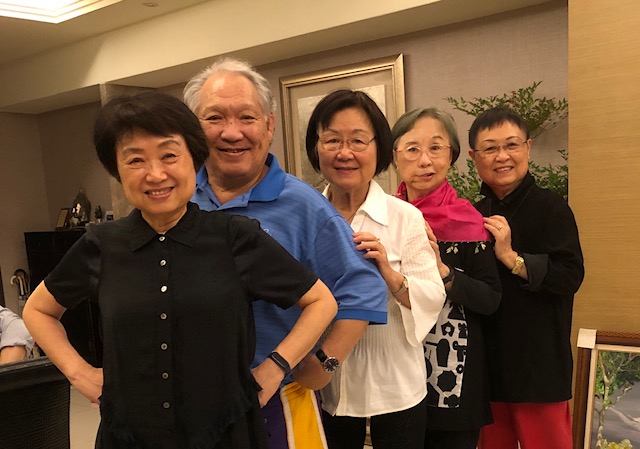
Dr. Lin developed a close friendship with several prominent artists, including Bonnie Kwan Ho, who expresses her gratitude in a message upon her return to Hong Kong from a visit at the University of Indianapolis during which she stayed with the Lin’s. Dr. Lin also maintains long lasting friendships with graduate students from Taiwan and elsewhere in Applied Sociology Program.
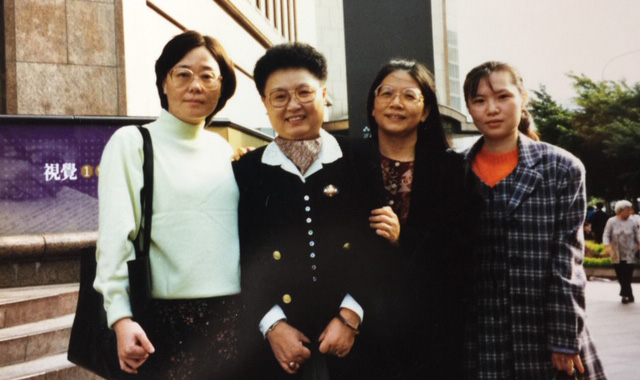
“As Master Au said before, we are indeed fortunate to have you as a friend. The more I get to know you, the more I am intrigued by the depth of your knowledge, the height of your vision, the width of your network, the capacity of your ability, and the beauty in your heart. Phylis, you are an inspiration and a role model for me, and I believe for many people around you.” —October 11, 2001 “Thanks beyond words”
Long lasting friendships and collaborations that endure across decades require nurturing through thoughtful communications that bridge distance. Dr. Lin shared the good news that she received the Jerry Israel Interfaith Service Award with dear friends prompting this exchange:
“It is with great pleasure that I congratulate you with the Interfaith Service Award! Thank you for passing this good news on and also for sending your thank you note to read. You really deserved to receive this prestigious award. Congratulations!” Best regards, Sulina Green – April 14, 2008
Over the years, Dr. Lin has collected more than 500 “thank you” notes from friends and colleagues. “Service” is simply a natural gesture and life philosophy for Phylis. It is not just her life philosophy, but also her guiding principle in cultivating and learning to become a leader. To be a leader, one must be a servant first, listen first, and be a follower first. “Always think of oneself less, but not think less of oneself,” is Dr. Lin’s motto in addition to her “VIP” Pillar of Life.