University of Indianapolis Center for Data Science Faculty
The Center for Data Science at the University of Indianapolis (UIndy) aims to create an environment for multidisciplinary collaboration and innovation. The faculty is encouraged to reach out to other faculty with mutual interests and project ideas. You may reach out to the faculty members directly.
Learn about the faculty's research interests and current projects below.
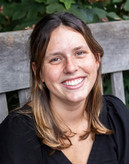
Dr. Sydney Campbell-Aaron
Assistant Professor of Statistics and Data Science
Department of Mathematical Sciences
Research Interests: Statistical applications in forensic science, Bayesian methods, item response theory, experimental design, sports analytics
Current Projects
- Nominal response modeling for assessing group-level decision probabilities
- Weighted averaging scheme for reporting reliable error rates
Background
Dr. Campbell-Aaron received her PhD in statistics from the University of Virginia, where she researched methods estimating error rates in binary decisions with inconclusive outcomes, with applications in forensic science. She uses both Bayesian and Frequentist statistical methods to approach varying problems.
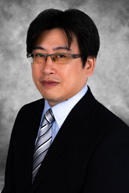
Dr. Hung-Fu (Aaron) Chang
Assistant Professor
R.B. Annis School of Engineering
Research Interests: Big data, intelligent systems, natural language processing, internet of things, software industrialization, software design
Current Projects
Personal health monitoring data analysis
Background
Hung-Fu has more than ten years of software development experience realizing machine learning, big data, the Internet of Things, and recommendation systems. He is interested in processing big data and applying machine learning to support human decision-making.
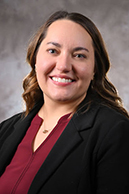
Current Projects
- Text Analysis of the Non-Profit Job Market
- Experiential learning with non-profits
Background
I’m a data scientist and educator in the School of Business, specializing in text analytics, data visualization, and SQL/database management. Before entering academia, I spent eight years as a data scientist in industry, applying predictive modeling, automation, and strategic reporting to improve human-centered systems across telecom marketing, sports analytics, and senior housing. Those experiences showed me both the power of analytics for real-world impact and the need to better connect technical training with the questions leaders and communities are trying to answer. I now focus on teaching applied analytics and building equity-minded learning experiences for students.
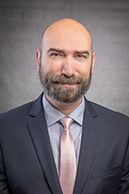
Dr. Alex J. Nelson
Assistant Professor
Department of Anthropology
Research Interests: Gender & sexuality, sex work, streaming businesses & social media, South Korea & East Asia, intimacy and romantic relationships, qualitative and quantitative analysis, content analysis, virtual ethnography, cross-cultural research
Current Projects
- Quantitative and qualitative analysis of adult cam models’ use of twitter and suspension rates.
- Comparative qualitative study of how relationship advice influencers in South Korea and China shape contemporary expectations of romantic relationships through content analysis of YouTube and BiliBili videos.
Background
Dr. Nelson received his PhD from the University of Nevada, Las Vegas where he conducted ethnographic research on transformations in romantic relationships, gender relations, and conceptions of romantic love in contemporary South Korea and their implications for Korea’s declining marriage and fertility rates. He has written on this work and the ethnology of love and in the journals: Cross-Cultural Research, Anthropological Quarterly, and Sapiens; as well as in several edited books: the International Handbook of Love, the Oxford Handbook of Human Mating, and Love Apocalypse: New Intimacies and the Decline of Marriage and Fertility. He is also engaged in interdisciplinary collaborative research projects aimed at understanding contemporary sexual commerce in the United States as forms of erotic entrepreneurship through the Erotic Entrepreneurs Project and Virtual Sexual Economies Project. Dr. Nelson is also a co-chair of CRN#6: Sex, Work, Law & Society, a collaborative research network within the Law and Society Association devoted to the sociolegal study of sexual labor and offers courses at UIndy training students in cross-cultural and ethnographic research methods.
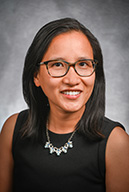
Dr. Quynh-Anh Nguyen
Assistant Professor
Department of Mathematical Sciences
Research Interests: Mathematical/computational biology; mathematical/computational neurosciences; nonlinear dynamics
Current Projects
- Computational models of auditory cortical response (AMS-Simons Research Enhancement Grant for Primarily Undergraduate Institution (PUI) Faculty)
- Analysis and application of finite mixture models
Background
My background is in Applied and Computational math. I have studied various functions of the neuronal system and how certain neuronal activities give rise to cognitive functions using mathematical modeling.
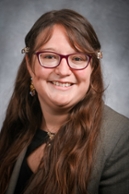
Dr. Abigail Richard
Assistant Professor
School of Business
Research Interests: Patent data analysis, mathematical programming, modelling, optimization, simulation
Current Projects
- Using patent data analysis to predict the innovation potential of post-pandemic industry partnerships, and understanding the role of information asymmetry in these alliance formations
- The role of COVID-19 in the development of new partnership trends and networks within the pharmaceutical industry
- Using discrete-event simulation to better serve the health care needs of bottom-of-the-pyramid markets in the development of capital equipment production strategies
Background
Abigail holds a doctoral degree in mathematics from the University of Cincinnati, where she received multiple teaching awards as a graduate student. She has worked on research projects funded by organizations such as the National Science Foundation, the Taft Research Center, and the Natural Sciences and Engineering Research Council of Canada. Her work has resulted in multiple publications in internationally recognized peer-reviewed journals in both mathematics and business. She greatly enjoys teaching and doing research relevant to data science. She especially enjoys interdisciplinary work, and she is always excited to collaborate.
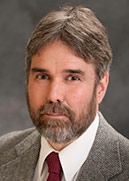
Dr. Steve Spicklemire
Associate Professor
R.B. Annis School of Engineering, and Physics & Earth Space Science
Research Interests: Predictive analytics, high-performance computing, machine learning
Current Projects
- Student success analytics
- Applications of machine learning and high-performance computing resources to scientific and engineering problems
Background
My background is physics and engineering but I’m very interested in applying machine learning, Bayesian inference, and data science techniques to problems that have not historically taken advantage of these techniques. I’m especially interested in using high-performance computing resources to tackle problems involving either very large data sets or compute-intensive algorithms that would not be practical otherwise.
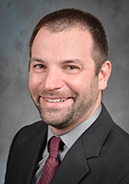
Dr. Paul Talaga
Associate Professor
R.B. Annis School of Engineering
Research Interests: Machine learning, cloud computing, big data, web security, robotics
Current Projects
- Autonomous navigation
- 3D mapping
- Content-Aware Upscaling of 2D and 3D Data
Background
My background is diverse including artificial intelligence, robotics, cloud computing, and web security. My primary research interest lies in optimizing data locality in large computer and web systems, with recent interests in robot navigation, 3D mapping, and using AI techniques to 'upscale' sensor data for robotics.
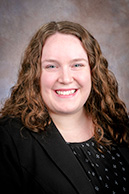
Dr. Colleen Wynn
Associate Professor and Chair, Department of Sociology
Co-Director, Community Research Center
Research Interests: Housing, neighborhoods, community, demography, families, race/ethnicity, social research methods, social research design, community-based research, applied research, public sociology, scholarship of teaching and learning (SoTL), quantitative data analysis
Current Projects
-
Adolescent sexual behavior and neighborhood perceptions
-
Historical residential segregation
Background
My background is in urban sociology and family demography. In my previous projects, I’ve often used secondary data from the decennial census, the American Housing Survey, the Future of Families and Child Wellbeing data, and more to explore housing and neighborhood outcomes. I have collaborated with community and neighborhood groups to design and give surveys to the populations they serve. I also frequently do Scholarship of Teaching and Learning (SoTL) work, including a cross-disciplinary project exploring the role of empathy in the college classroom. My courses often include community-based research or other opportunities for students to build their research and data skills.