The University of Indianapolis (UIndy) BSN-DNP Adult/Gerontological Primary Care Nurse Practitioner (AGPCNP) online track awards this terminal degree to registered nurses who want to achieve the highest-level proficiency in advanced practice nursing and influence quality improvements in adult-gerontology primary care.
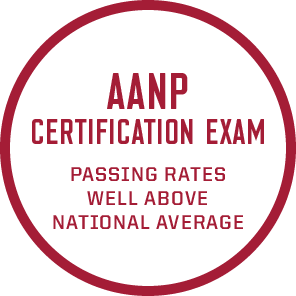

Advantages
- Part-time online format designed to accommodate working nurses
- The Clinical Placement team will work with you to help you identify and secure a placement site
- Develop expert clinical skills to care for patients of all ages, with a focus on family health
- Accredited by the Commission on Collegiate Nursing Education
About the BSN-DNP AGPCNP Track
With a BSN-DNP degree in Adult/Gerontological Primary Care Nurse Practitioner from the University of Indianapolis, you’ll be qualified to autonomously* deliver complex care for adults of all ages across a broad life spectrum. You’ll play an important role in improving their functionality and quality of life, and you will use your health system leadership and translational research skills to improve patient outcomes.
*Scope of practice and need for physician supervision varies by state law.
Track Length & Format
The online BSN-DNP AGPCNP track is 62 credit hours, with 1,050 - 1,250 clinical and practicum hours, and is completed on a part-time basis. It can be completed in 10 consecutive semesters.
This track is online, non-clinical courses are asynchronous and clinical courses are synchronous. Students will be required to come to campus for periodic checkoffs in their health assessment and diagnostics courses. In compliance with new competency based accreditation requirements, students may also need to come to campus for Observed Structured Clinical Examinations (OSCE) learning experiences during their clinical courses.
Online BSN-DNP AGPCNP Sample Courses
UIndy's School of Nursing provides one-on-one advising through these courses:
This course provides a comprehensive medical and pathophysiologic foundation for the evaluation of clients in various health care settings. Students will analyze the relationship between normal physiology and the disease state. A brief review of normal physiology and anatomy is included, as well as the pathophysiology of selected disorders and diseases. This course is intended to enable advanced practice nurses to understand and bridge the pathophysiological foundations of various disease processes as manifested by signs and symptoms seen in the clinical setting. Students will analyze the relationship between normal physiology and the different disease states. They will develop an understanding of the mechanism(s) underlying different disease syndromes and their clinical manifestations, so that therapeutic rationale can be ascertained. An introduction to appropriate screening and diagnostic laboratory evaluative methods related to advance primary care nursing practice will also be included. Emphasis will be placed on the clinical understanding and identification of disease states.
This course will focus on the development of policy analysis and advocacy skills necessary to influence policy change in organizations and at the local, state, national, and international levels. Students will study the role of laws and regulations within the U.S. health system, and explore economic, financial, and political influences on the policy-making process. Additional areas of study include the importance of interprofessional collaboration in improving health outcomes through the policy process.
This class is a culminating practicum experience that is designed to facilitate students in their transition to advanced practice in primary care. The student will be able to apply scientific, ethical, theoretical, and evidence-based practice guidelines to the multifaceted patient, family, and community situations. Application of organizational management principles to the advanced practice role and other issues pertinent to professional role transition is emphasized.
This course is the first of a four-course series that provides the Doctor of Nursing Practice (DNP) student with mentored opportunities to plan, develop, implement, evaluate, and disseminate an evidence-based scholarly project focusing on practice issues related to the student’s topic of interest. Each course builds on the knowledge and practice expertise of the DNP student, culminating in the DNP project. Throughout DNP project courses, each student will practice specific hours in a clinical area related to their topic of interest and submit individual objectives for the DNP practicum experience. In each DNP project course, the student will be responsible for documenting and submitting a log of the practicum hours completed. This course focuses on the development of a DNP project within the student’s practice setting including approximately 100 practicum hours.
When Can I Start?
There are 2 intakes: Fall and Spring
Admission Requirements
- BSN degree from an accredited institution
- Unencumbered RN license
- Minimum cumulative GPA of 3.0
- 1 year of full-time work experience prior to starting clinicals
- Letter of recommendation
- Essay
View the full admission requirements and admission process.
Contact the School of Nursing
- Phone: 317-788-8031
- Email: chsadmissions@uindy.edu